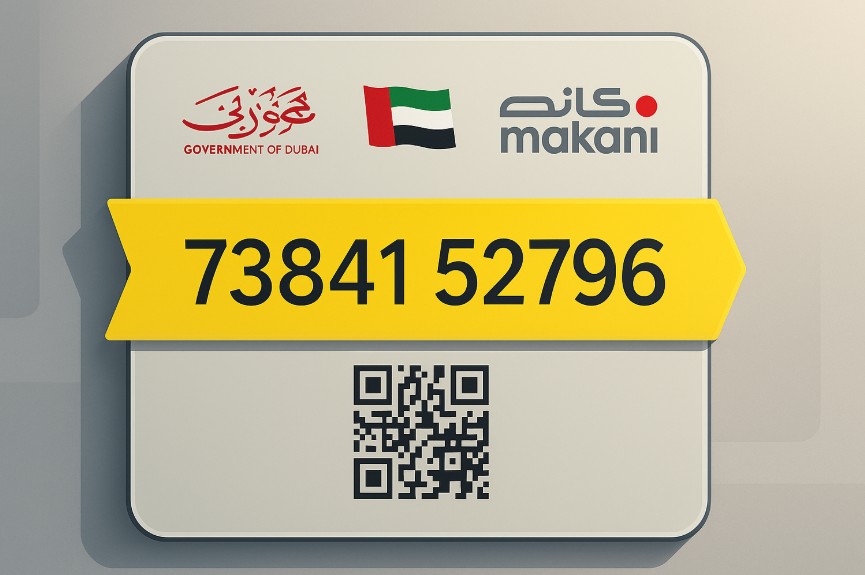
Navigating the vast and ever-growing city of Dubai can feel overwhelming, especially for newcomers or anyone unfamiliar with the local addressing system. Traditional addresses, often inconsistent or vague, made locating buildings difficult for residents, tourists, emergency responders, and delivery personnel.
That’s why the Dubai Municipality introduced the Makani number, a digital solution to pinpoint any building with unmatched accuracy. Whether you’re scheduling a delivery, visiting a government office, or exploring the city, understanding how Makani works will simplify your journey.
This smart location tool has become a key part of Dubai’s infrastructure. It eliminates confusion by offering an exact location for each property.
If you’ve ever received instructions like “near the roundabout” or “opposite the gas station,” you’ll understand why a system like Makani is essential. In this guide, you’ll learn everything you need to know about the Makani number, from how it works and how to find it to why it’s vital for daily life in Dubai.
What Exactly Is a Makani Number in Dubai?
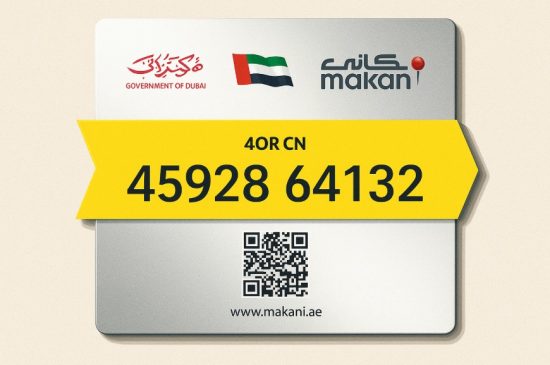
The Makani number is a 10-digit unique identifier that precisely marks the entrance of every building and public location in Dubai. Developed by the Dubai Municipality, this system replaces traditional street-based addresses with a highly accurate GPS-linked digital alternative.
- The term “Makani” translates to “my location” in Arabic
- Introduced in 2015, it became mandatory for all buildings in Dubai
- Functions as a precise geolocation tool across real estate, emergency services, and public infrastructure
Unlike conventional addresses that may include street names or district references (which can be duplicated or unclear), the Makani number offers a direct, permanent, and standardized method for identifying a building’s location.
Its applications extend far beyond simple navigation.
Here’s why it matters:
- Navigation: Helps you reach exact destinations without confusion
- Logistics: Enhances delivery efficiency by reducing failed attempts
- Emergency Services: Critical for faster police, ambulance, and fire response
- Urban Development: Supports smart infrastructure planning
Dubai’s advanced city planning includes seamless integration of the Makani system into public services, delivery networks, and legal documentation. As a result, it has become an indispensable part of daily life for residents, tourists, and service providers.
How Does the Makani Number System Work in Dubai?
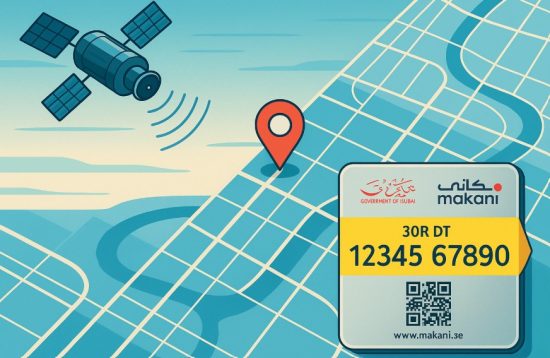
The Makani system uses geospatial technology to deliver exact building locations using a simplified code. It is fully integrated with satellite mapping systems and is maintained by the Dubai Municipality to ensure accuracy and reliability.
How Makani Numbers Are Assigned?
Each building in Dubai is assigned a Makani number upon completion of its construction. The municipality maps the main entrance of the building using geographical information systems (GIS) and GPS technology, and then generates a unique 10-digit identifier. These numbers are displayed on plaques mounted near building entrances.
- Buildings are not assigned the number until officially registered
- Each entry point to a building gets a separate Makani number
- Makani numbers remain constant unless the building is structurally modified
Role of GPS Coordinates
The Makani number represents a precise geolocation accurate to within one meter of the building’s entrance. It is based on a universal grid system and does not rely on descriptive labels, making it highly reliable.
- High accuracy for mapping and delivery
- Eliminates errors in finding obscure locations
- Improves route planning for emergency teams
Smart Addressing by Dubai Municipality
Dubai Municipality developed the Makani system to align with Dubai’s Smart City ambitions. It is more than just an addressing tool, it’s part of a larger ecosystem that includes:
- Integration with city planning tools
- Seamless usage across navigation systems
- Easy access through the Makani app and website
- Cross-platform compatibility with Google Maps and government portals
By centralizing location data, the Makani number has simplified how buildings are identified and reached across Dubai and neighboring Emirates.
How Can You Find Your Makani Number Easily?
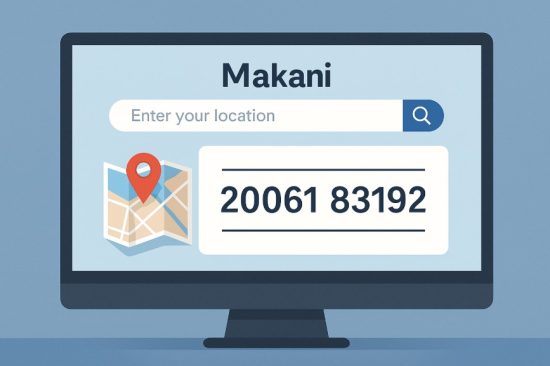
Locating your Makani number is straightforward, thanks to digital tools provided by the Dubai government.
- Makani Website: Visit the official Makani website. Enter your location in the search bar or allow location access to fetch your current Makani number instantly.
- Makani Mobile App: Download the Makani app from the iOS or Android store. You can enable GPS, search by your building address, or tap on the map to get any building’s Makani number.
- Google Maps Integration: Google Maps now supports Makani data. Type the number in the search bar to find the exact building.
- Physical Signboards: Makani numbers are posted at building entrances, usually near gates or main doors for easy identification.
These options make the system highly accessible and user-friendly, even for tourists and first-time users.
What Is the Format of a Makani Number?
The Makani number’s format is designed for simplicity, clarity, and uniformity across all building types. It is a 10-digit numeric code, with no letters or special characters.
Each number is assigned to the main entrance of a building, and in cases of buildings with multiple access points (like malls or large residential complexes), each entrance will have a unique Makani number.
| Feature | Description |
|---|---|
| Length | 10 digits |
| Type | Numeric only |
| Assigned by | Dubai Municipality |
| Linked to | GPS location (accurate within 1 meter) |
| Applicable to | Completed buildings and facilities |
| Shown on | Building entrance plaques or stickers |
This streamlined format enables effortless integration into navigation apps, legal documents, and public service records, ensuring that you always reach the right place at the right time.
What Are the Benefits of Using a Makani Number?
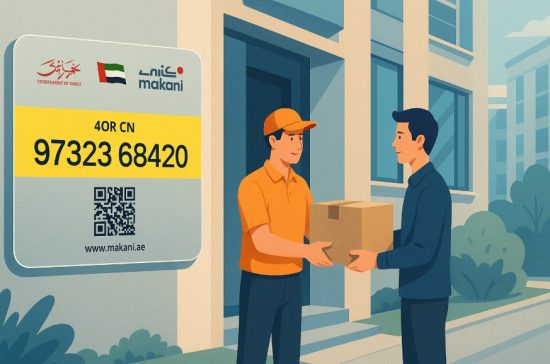
Using the Makani number brings a host of practical advantages that improve how individuals and businesses interact with Dubai’s infrastructure.
For Delivery and eCommerce
- Reduces delivery delays and failed attempts
- Ensures parcels are sent to the correct entrance
- Optimizes logistics for online retailers and courier companies
For Property Identification
- Essential for real estate sales, leasing, and registration
- Confirms property location during legal documentation
- Helps prospective buyers view listings more accurately
For Emergency Response and Navigation
- Enables police, ambulance, and fire teams to reach locations faster
- Crucial for situations where time is of the essence
- Offers greater safety for residents and travelers
Additional benefits include:
- Smoother communication with government authorities
- Easier taxi bookings and rideshare pick-ups
- Enhanced city planning and traffic control
- Better coordination among utilities and maintenance providers
Makani is not just a tool, it’s a citywide enabler for smarter, faster, and safer interactions.
Where Can You Use the Makani Number in Daily Life?
The Makani number isn’t just a technological upgrade, it’s a powerful tool woven into the fabric of everyday life in Dubai. Designed for accuracy and ease of use, this 10-digit code plays a pivotal role in streamlining a wide range of daily tasks.
Whether you’re navigating the city, arranging appointments, or managing household services, the Makani number ensures precision, speed, and convenience.
Let’s explore the key areas where you’ll commonly use a Makani number:
- Food Delivery: Delivery drivers can reach the exact entrance, avoiding delays and confusion.
- Taxi Services: Use Makani codes for precise pickup and drop-off via Careem, Uber, and other apps.
- Medical Emergencies: Share the number with emergency responders for faster assistance.
- Utility and Government Services: Required for DEWA, Etisalat, and in many government forms.
- Event Navigation: Add it to invites to help guests find venues without hassle.
- Online Forms and Property Transactions: Often needed for real estate applications and official registrations.
No matter the situation, whether you’re moving into a new home, ordering essentials online, or helping a friend find your location, the Makani number offers a reliable solution.
It replaces outdated and inconsistent address systems with something far more accurate and user-friendly. By integrating this code into your daily routine, you make life easier not only for yourself but for service providers, businesses, and government agencies as well.
How Does the Makani Number Improve Location Accuracy?
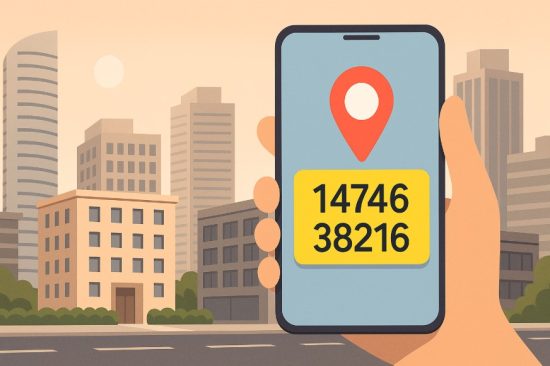
Accuracy is at the heart of the Makani system. It outperforms traditional address formats by eliminating guesswork and standardizing building identification.
Comparison with Traditional Addressing
Traditional systems relied heavily on area names, block numbers, or landmarks, many of which were vague or duplicated across neighborhoods. This created confusion, particularly for:
- Tourists
- Delivery personnel
- Emergency responders
- Real estate clients
The Makani number offers consistency and reliability no matter the context.
Use of GPS Coordinates and Satellite Mapping
Each number corresponds to a specific GPS location and is derived from satellite data and GIS technology. This high-level accuracy:
- Reduces navigation errors
- Improves service delivery
- Enhances smart infrastructure planning
By leveraging GPS, Dubai ensures that each Makani number leads precisely to the front entrance of a building, improving overall urban efficiency.
Who Developed the Makani Number and When?
The Makani system was developed by Dubai Municipality and officially launched in 2015 as a part of the city’s strategy to become a globally recognized smart city.
- Inspired by international best practices
- Tailored to Dubai’s rapidly growing urban environment
- Adopted by neighboring Emirates such as Ajman, Ras Al Khaimah, and Fujairah
The idea was to introduce a future-proof and digitally-enabled addressing model that could handle the demands of a modern city. Since its inception, the Makani number has been incorporated into government processes, e-commerce ecosystems, real estate transactions, and even Dubai’s emergency response protocols.
Can Tourists and Visitors Use the Makani Number System?

Absolutely. Tourists in Dubai can benefit significantly from the Makani number system.
- Locating Hotels: Many hotel listings include Makani numbers for easier arrival
- Finding Attractions: Use the number to locate Burj Khalifa, Dubai Mall, and other landmarks
- Rideshare and Taxi Bookings: Tourists can share Makani numbers with drivers to avoid miscommunication
- Travel Itineraries: Add Makani numbers to your trip plan for easier navigation
Since visitors are often unfamiliar with local landmarks or district names, the Makani number provides a simple and effective alternative.
What Happens if You Don’t Use a Makani Number?
Failing to use or share a Makani number when needed can lead to various inconveniences or even critical delays.
- Delayed or Missed Deliveries: Incorrect or incomplete addresses confuse delivery agents
- Service Request Issues: Government forms may reject applications lacking a valid Makani code
- Emergency Delays: First responders may take longer to reach you
- Legal or Business Delays: Real estate and utility procedures often require Makani verification
Including the Makani number in all location-based communication improves accuracy, reduces risk, and speeds up services.
Conclusion
The Makani number is more than just a 10-digit code it’s a critical component of Dubai’s innovative urban planning strategy. It simplifies everyday life by offering a standardized, GPS-based address system for every structure in the city.
Whether you’re a local resident, a business owner, or a tourist, using the Makani number ensures you can find or share a location with absolute confidence.
As Dubai continues to expand and lead the way in smart city development, Makani numbers will only become more integrated into the city’s services and digital infrastructure. Embrace the system now to stay ahead in an increasingly connected world.
FAQs
What is the purpose of a Makani number in Dubai?
It provides a unique location identifier to make navigation, deliveries, and emergency responses faster and more accurate.
Is the Makani number mandatory for residents in Dubai?
Yes, it is used for services like property registration, deliveries, and legal documentation.
How do I use the Makani number on the app?
Enable location services in the Makani app, and it will display your building’s Makani number automatically.
Can businesses in Dubai benefit from using Makani numbers?
Yes, businesses use it for accurate deliveries, real estate transactions, and managing customer locations.
What do I do if my Makani number is incorrect?
Report it to the Dubai Municipality through the app or their official portal to have it corrected.
How is the Makani number better than street addresses?
It offers GPS-level accuracy and does not rely on potentially duplicated or outdated street names.
Are Makani numbers used outside of Dubai?
Yes, they are also implemented in other Emirates such as Ajman, Fujairah, and Ras Al Khaimah.