Have you recently experienced the loss of a loved one and are wondering how to officially register their passing in the UAE? Obtaining a death certificate is a crucial legal step that confirms the time, location, and cause of death. It is necessary for processes like burial arrangements, property claims, insurance, repatriation, and settling the deceased’s legal affairs.
In the UAE, death registration and certificate issuance are well-structured but may vary slightly depending on the emirate. Whether you are a resident, expatriate, or visitor, the process is streamlined through digital portals like TAMM, EHS, or DHA. Understanding the documentation requirements, approval steps, and applicable fees helps you avoid delays and confusion during an already difficult time.
This guide outlines the complete process to obtain a death certificate in the UAE, including legal, procedural, and emirate-specific requirements, ensuring clarity and compliance every step of the way.
What Is a Death Certificate and Why Do You Need One in UAE?

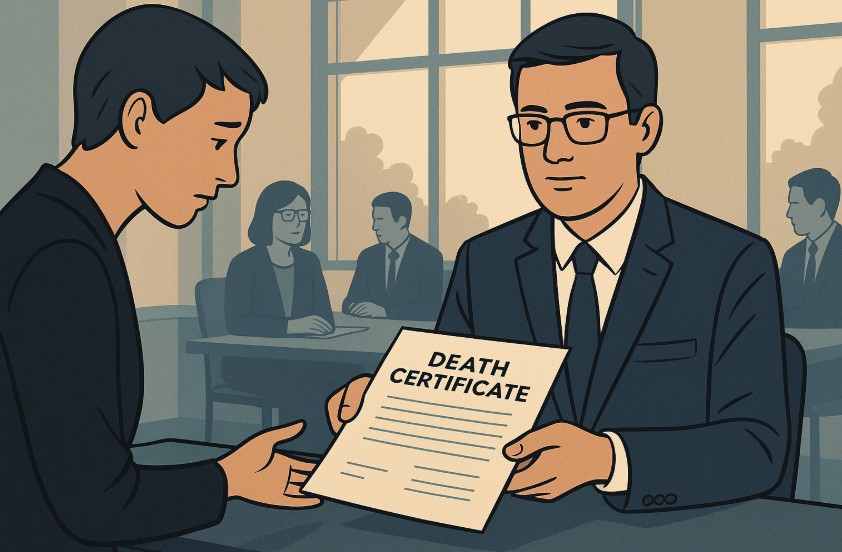
A death certificate is an official document issued by the UAE government, confirming an individual’s death. It records essential details such as the deceased’s name, nationality, date, time, and place of death, and cause of death if available. It is legally required to settle administrative tasks after a person’s passing.
In the UAE, a death certificate serves multiple functions. It allows families to initiate legal and financial processes, such as claiming life insurance, executing wills, or transferring property ownership.
For expatriates, it is necessary for repatriating the body to their home country, which often requires additional attestation from the Ministry of Foreign Affairs and International Cooperation (MOFAIC). Without this certificate, burial or cremation services cannot proceed, and banks or institutions will not release funds or assets.
The certificate is typically issued through authorized health authorities, including Emirates Health Services (EHS), Department of Health (DOH), or Dubai Health Authority (DHA), depending on the emirate in which the death occurred.
Who Can Apply for a Death Certificate in the UAE?
In the UAE, the death certificate application process is open to individuals who have a legal or familial relationship with the deceased. The law clearly outlines who is eligible to apply to ensure that sensitive information and legal documents are handled appropriately.
The following people are eligible to apply:
- A first-degree relative of the deceased (parent, spouse, child)
- A legally appointed representative
- A member of the deceased’s employer or institution (with a formal letter)
- A representative of the embassy or consulate, especially in expatriate cases
- Authorized individuals listed in a letter from Dubai Police, public health authorities, or the deceased’s place of work
Eligibility also extends to individuals providing funeral arrangements or processing repatriation of remains, provided they have the legal authority or documentation required.
When applying, the authorized person must submit identification documents for both themselves and the deceased. This includes Emirates ID, passport, and residency visa. If an individual is acting on behalf of someone else, a legal authorization or a consulate letter must be provided.
In cases where a person is not directly related but is acting as a representative of the deceased’s embassy or legal counsel, they must present an official letter to support their authority to apply for the certificate. This ensures that all legal channels are respected and the sensitive process remains secure and traceable.
What Are the Required Documents for a Death Certificate?
When applying for a death certificate in the UAE, specific documentation is essential for processing the application smoothly. Authorities require original documents and attested copies to verify identities and the circumstances of death. The required paperwork ensures the process remains transparent and compliant with legal standards.
Mandatory documents include:
- Emirates ID of the deceased
- Passport of the deceased
- Residency visa of the deceased
- Emirates ID and passport of the applicant
- Residency visa of the applicant (if applicable)
- Death Notification Form, issued by a hospital or morgue
- Burial permit or no-objection certificate (NOC) from Dubai Police or other local police department
- Forensic report, especially when the cause of death is unknown or suspected criminal activity occurred
- Attested death notification if applicable
- Letter of authority (if applicant is not a direct family member)
If the applicant is applying for a physical replacement copy of the death certificate, a loss certificate from Dubai Police is also required. All documents must be translated into Arabic where necessary, especially for embassy or legal submissions.
Also, if the applicant is applying through online platforms like EHS or TAMM, digital scans of all the documents will be needed during the upload stage of the application. Ensuring all documents are complete helps prevent delays and rejections during the verification stage.
How Do You Report a Death in the UAE?
Reporting a death in the UAE is the first and most crucial step in the death certificate process. This stage confirms the death officially and initiates the legal proceedings required to obtain all necessary documentation.
When a death occurs in a hospital:
- The hospital or morgue authority will initiate the death notification report
- This report includes essential information such as name, time, date, and suspected cause of death
- The notification is forwarded to the police department for further verification
If the death occurs outside a hospital:
- The body must be transported to a government hospital or forensic medicine department
- A preliminary examination is conducted to issue a medical report
- Dubai Police or the relevant emirate’s police force must be informed immediately
- A no-objection certificate (NOC) is required from the police to proceed
Special cases include:
- Accidental or criminal deaths require a full forensic report
- The police may hold the case for further investigation if suspicious circumstances are detected
After receiving the initial documentation, the authorized applicant must begin the formal process of registration through the appropriate health authority portal. Only once the death is officially reported and verified can a certificate be requested.
Timely reporting ensures that burial, repatriation, or legal processing can continue without delay or complications.
What Is the Step-by-Step Process to Apply for a Death Certificate?

In the UAE, the process to obtain a death certificate is clearly structured and varies slightly depending on the emirate. Most applications are now handled online through digital platforms such as TAMM (Abu Dhabi) or EHS (other emirates). Below is a detailed breakdown of the step-by-step process.
Step 1: Report the Death
The death is reported by the attending hospital or the concerned authority if the death occurred outside a hospital. The medical team issues a death notification, which contains initial information such as name, date, and possible cause of death. If death occurred outside a medical facility, the case must be reported to the local police and then transferred to a government hospital for verification.
Step 2: Obtain a No-Objection Certificate (NOC)
The family or legal representative must obtain a NOC from the police. The NOC is issued after the initial death declaration is stamped and the police are satisfied there is no foul play. In cases of criminal suspicion, additional forensic reports may be required.
Step 3: Register the Death with Authorities
Log in to the appropriate portal (TAMM or EHS) using UAE PASS credentials. Choose the service “Issue Death Certificate.” Enter the notification number (QAID number) and attach scanned copies of the required documents.
Step 4: Submit Documents and Pay Fees
Attach all mandatory documents and complete the application. The fee is AED 65 for either Arabic or an English certificate. If attestation from the Ministry of Foreign Affairs (MOFAIC) is required, pay an additional AED 300.
| Service | Time | Cost |
| Arabic Death Certificate | 1 working day | AED 65 |
| English Death Certificate | 1 working day | AED 65 |
| MOFA Attestation | Same day | AED 300 |
Step 5: Receive the Death Certificate
Once verified, an electronic certificate is issued and emailed or made downloadable. For a physical copy, visit a public health center within the same emirate. Following this structured process ensures timely issuance and avoids application rejections. Ensuring timely application submission with accurate documentation guarantees a smooth process with minimal delays or extra charges.
Can You Apply for the Death Certificate Online in UAE?

Yes, applying for a death certificate in the UAE is now easier than ever, thanks to the country’s digitized government service systems. Applications can be completed entirely online, minimizing the need for in-person visits.
The process begins by creating an account using UAE PASS on one of the following official portals:
- Emirates Health Services (EHS) for Northern Emirates
- TAMM for Abu Dhabi
- Dubai Health Authority (DHA) for Dubai residents
Once logged in, select the service “Issue Death Certificate,” complete the form, upload required documents, and pay the applicable fees online.
Benefits of applying online:
- Fast and secure document uploads
- Electronic certificate issuance
- Real-time status tracking
- 24/7 service availability (depending on the portal)
After successful processing, the death certificate is issued electronically. For those needing a physical copy, it can be collected from the designated public health center.
Online application is the preferred method for many, especially during emotional or time-sensitive situations, offering convenience and accessibility for all residents and expatriates.
Do You Need to Attest a Death Certificate in UAE?
Attestation of a death certificate in the UAE is not always mandatory, but it becomes essential when the document is to be used outside the country, particularly for repatriation or international legal procedures.
Once the certificate is issued by either Emirates Health Services, Dubai Health Authority, or the Department of Health (Abu Dhabi), it holds official recognition within the UAE. However, to validate the certificate for international use, attestation from the Ministry of Foreign Affairs and International Cooperation (MOFAIC) is usually required.
When attestation is necessary:
- Repatriating the deceased to their home country
- Submitting documents to foreign embassies
- Processing foreign inheritance claims
- Closing international bank accounts
Attestation process involves:
- Paying AED 300 through the relevant ministry portal
- Submitting original death certificate
- Optionally translating the certificate if required by the destination country
After attestation, the document becomes legally recognized for use both in and outside the UAE. Ensuring this step is completed early can prevent delays in international arrangements or legal obligations.
How Do You Replace a Lost or Damaged Death Certificate in UAE?
Replacing a lost or damaged death certificate in the UAE is a straightforward but carefully regulated process. It requires proof of the document’s loss and reapplication through the original issuing authority.
The first step is to obtain an official loss report from the Dubai Police or the relevant emirate’s police department. This report confirms that the original document has been misplaced or damaged.
Steps to apply for replacement:
- Obtain a police loss certificate
- Visit the same platform used for the original application (EHS, TAMM, or DHA)
- Log in using your UAE PASS
- Select the option for “Reissue or Replacement of Death Certificate”
- Upload the required documents and the police report
- Pay the standard AED 65 fee
Required documents:
- Emirates ID of the applicant
- Police loss report
- Passport copies (if applicable)
- Authorization letter (if submitted by a third party)
Processing time remains 1 working day, and applicants can opt for an electronic or physical copy. It is advised to keep the replacement certificate securely stored, as the same reapplication process must be repeated in case of another loss. Timely replacement ensures that legal, personal, or insurance processes are not disrupted due to missing documentation.
What Are the Differences in Process Across Emirates?

While the overall death certificate process is consistent across the UAE, each emirate operates under its own health authority portal, which can slightly affect the steps and service experience. Understanding these differences helps applicants avoid confusion and apply to the correct platform.
1. Abu Dhabi (TAMM)
- Uses TAMM digital platform for applications
- Administered by the Department of Health (DOH)
- Requires login with UAE PASS
- Physical certificate collection at the designated TAMM center
- MOFAIC attestation available through the same portal
2. Dubai (DHA)
- Managed by the Dubai Health Authority
- Certificate requests submitted via the DHA portal or affiliated hospitals
- Often involves direct coordination with the Dubai Police for NOC
- Physical copies collected from government hospitals
- Translation and notarization services may be offered for expats
3. Northern Emirates (EHS)
- Use the Emirates Health Services (EHS) online portal
- Covers Sharjah, Ajman, Umm Al Quwain, Fujairah, and Ras Al Khaimah
- Physical certificate available at local public health centers
- The application process is typically more centralized
- Required documents are the same, but verification timings can vary
| Emirate | Application Portal | Certificate Collection Location |
| Abu Dhabi | TAMM | TAMM Center |
| Dubai | DHA | Government Hospitals |
| Northern Emirates | EHS | Public Health Centers |
These regional differences highlight the importance of identifying the emirate in which the death occurred and using the designated platform for accurate and timely processing.
Conclusion
Applying for a death certificate in the UAE is a structured and efficient process designed to serve residents, expatriates, and visitors with clarity and care.
Whether the death occurs in a hospital or outside a medical facility, the steps remain consistent report the death, obtain a NOC, gather required documents, and submit an application through the correct health authority portal. The government’s digital platforms simplify the process and ensure quick turnaround times.
Understanding emirate-specific differences, required documentation, and available service channels ensures that you’re prepared at each stage. Attestation, replacement procedures, and embassy coordination for expatriates are critical considerations that should not be overlooked.
By following the guidance in this comprehensive article, you can ensure all legal, medical, and personal processes are completed smoothly during an already emotional time, giving peace of mind and compliance with UAE regulations.
FAQs
How long does it take to get a death certificate in the UAE?
It typically takes one working day after successful document verification and payment.
Can I apply for the certificate online without visiting an office?
Yes, most emirates allow full online application through EHS, TAMM, or DHA platforms.
Is attestation necessary for all death certificates?
No, only if the certificate will be used internationally or for body repatriation.
Can a friend apply for the death certificate?
Only if they are authorized with a letter from the police, embassy, or family.
What if the death occurred outside a hospital?
The body must be examined at a government hospital, and a police report is required.
Can I get the certificate in English?
Yes, you can request an English copy for an additional AED 65 fee.
Is there a fee for replacing a lost death certificate?
Yes, you must pay AED 65 and provide a police loss report for reissuance.