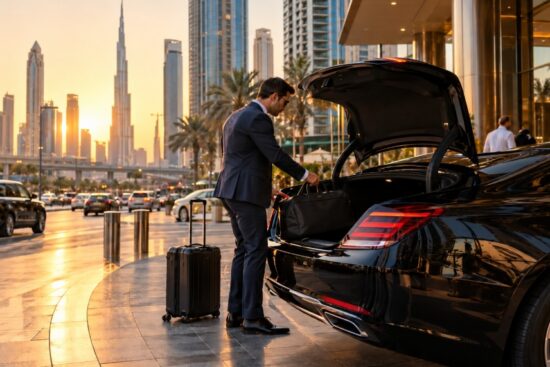
A typical business trip to Dubai rarely fits one plan. There is an early landing at DXB, a meeting in DIFC, a site visit somewhere off the main road and a client dinner in the Marina.
Each leg of the trip has the potential to turn into a long, unproductive loss of time if the best way to get there is not taken into consideration. The person who treats travel as a single decision can easily end up spending their trip stuck in traffic or on hold with a taxi app.
That is why the conversation has shifted. The focus is not only on how many people fly in for work, but also on how they get around when they get here.
Why Is Flexible Mobility Important for Dubai Business Travel?
A City Built for Business Visitors
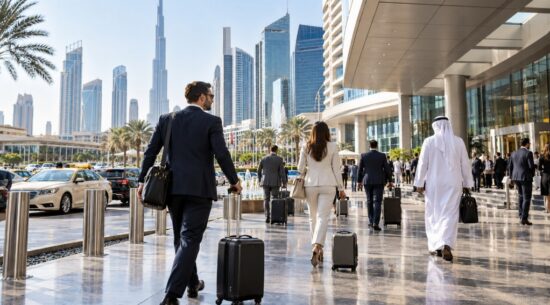
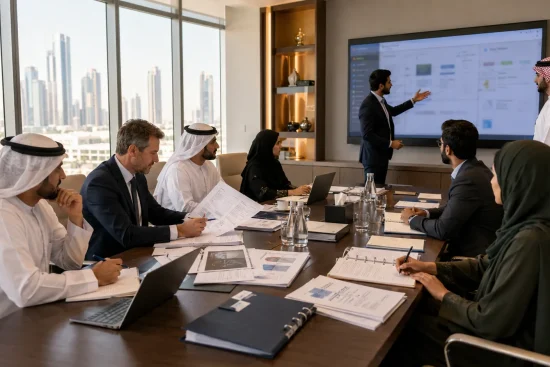
In 2025, the statistics behind Dubai’s business attractiveness were the best they had ever been. There were 19.59 million international overnight visitors, average hotel occupancy was 80.7% and the average length of stay was 3.7 nights.
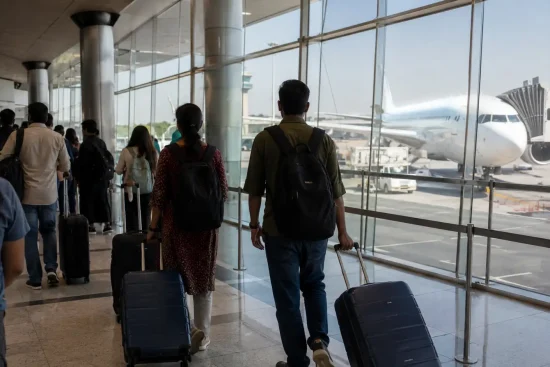
With stays that short, every hour spent getting around the city really does count. In 2025, Dubai International was the world’s busiest airport for international traffic and 95.2 million passengers passed through its terminals.
The top three source markets for Dubai in 2025 were India, Saudi Arabia and the UK. Last year, Dubai Business Events won 504 bids for future business events, from global congresses to corporate meetings, a 15% increase over the previous year.
The ICCA ranked Dubai first in the world for attendees per association conference. The Dubai World Trade Centre (DWTC) hosted 108 large events and welcomed 2.18 million attendees. Spending on travel and transport linked to these events reached almost Dh3 billion.
2026: A Year That Rewarded Flexibility
It’s been a more difficult year. Conflict in the region caused the UAE to partially close its airspace from late February, and restrictions were only fully lifted on 2 May.
Passenger numbers at DXB fell by almost a third in the first half of the year, and Arabian Travel Market was forced to move twice before taking place in September.
Recovery has continued since then. The 869,000 visitors in August were the most since February and the occupancy rate for hotels in August climbed to 66%. GITEX GLOBAL, which takes place this December, will be held at the Dubai Exhibition Centre at Expo City after more than four decades at the World Trade Centre.
The long-term goals have not changed. The first phase of the Dh128 billion expansion of Al Maktoum International is due in 2032 and will raise capacity to 150 million passengers a year.
GBTA, the global business travel association, forecasts that worldwide business travel spending will set a record this year at $1.71 trillion. It also expects a 12.3% decline in Middle East travel volume. The message to businesses is clear: travel plans need to be adaptable, and the same goes for how employees get around once they land.
The New Mobility Menu
A business traveller in Dubai now has more options than ever, and several of them arrived this year:
- In 2025, the metro had 294.7 million riders. Its Red Line already reaches Expo City, and a new Blue Line is scheduled to open in 2029.
- In 2025, 45% of taxi trips were booked through apps, and app-booked limousine trips grew by a quarter.
- Driverless taxis operated by both Baidu’s Apollo Go (in partnership with Dubai Taxi Company) and WeRide (via Uber) opened to the public in Jumeirah and Umm Suqeim at the end of March.
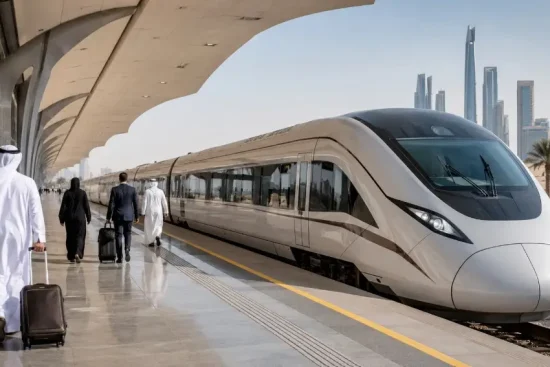
- Etihad Rail opened its Dubai station on 30 September, and Abu Dhabi is about an hour away by train.
- The air taxi vertiport next to DXB was certified in July. Passenger flights are not operating yet.
Rental cars sit in the middle of this menu. At the end of 2024, Dubai had 3,494 rental companies with a total of 71,040 vehicles, and rental operators reported monthly and long-term demand increases of up to 30-35% this year, mostly from residents delaying car purchases.
Where a Flexible Rental Fits In?
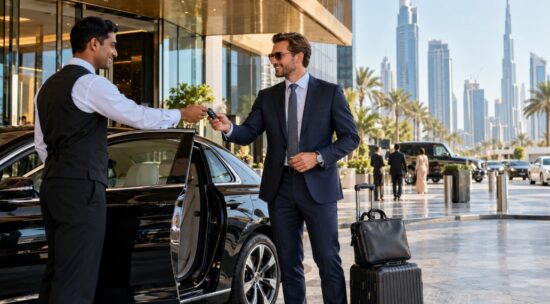
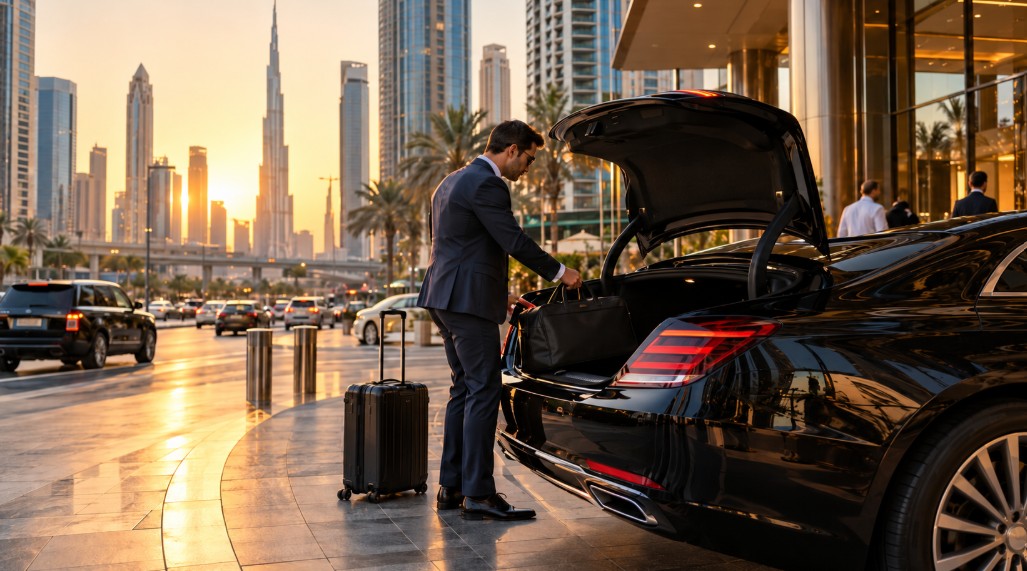
Trinity Rental offers daily, weekly or monthly hire to visitors with changing schedules, either self-drive or with a chauffeur. Its more than 80 vehicles range from premium saloons to exotic and luxury models at the elite, prestige end of the market, including some 2024 models.
No deposit is required. The price is inclusive of insurance, VAT, toll roads and 300 km a day. Cars are delivered with a full tank, and the delivery area is all of Dubai including the airport, hotels and offices.
Payment is accepted in cash, by Visa/Mastercard and in crypto. A dedicated manager is assigned to each booking. Trinity car rental also provides a car with driver for VIP arrivals and full days of meetings. For business travellers who rent car in Dubai for work, one booking covers the car, insurance and tolls.
Matching the Mode to the Hour
Flexibility is of great importance in Dubai, because the city now prices movement by time of day. Salik toll gates charge more from 6am to 10am and from 4pm to 8pm, Monday to Saturday.
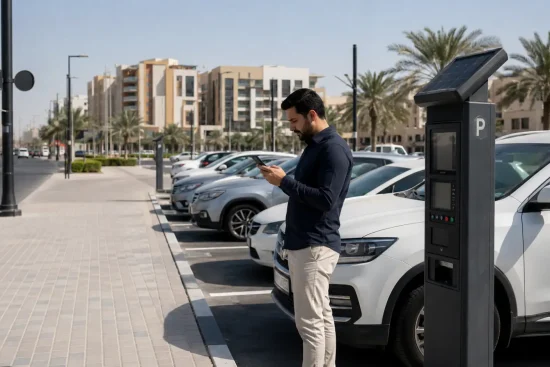
Since June 2026, the peak toll has cost Dh6.30 including VAT. Public parking follows similar peak hours, and about 200 spaces near the World Trade Centre cost Dh25 an hour plus VAT during big events.
Visitors holding a licence from a country on the UAE’s approved list, which covers the GCC, most of Europe, the UK and the US among others, can drive on it, while others need an International Driving Permit.
This means the self-drive option depends on the passport as well as the schedule. For those who do not want to drive, an RTA permit introduced in 2025 allows licensed limousine companies to provide a luxury car with a chauffeur for up to one month.
In practice, a common pattern is to split the week. The metro or train can handle the trip to an exhibition. A chauffeur can cover a day of back-to-back client meetings.
A self-drive car can take care of a weekend in the mountains. Companies are slowly formulating policies around this type of travel. In a GBTA poll, published in October 2025, 43% of travel buyers said they had a clearly defined policy on blending business and leisure travel.
Flexibility is the new business class
For years, Dubai has built state-of-the-art infrastructure geared towards the business traveller, from conference halls to driverless taxis. What 2026 has added is a reminder that the best plan is the one that can change. For organisations sending staff to Dubai, the smartest travel policy may be the simplest: pick the right way to get around each day and change it if needed, rather than choose one way to get around for the entire trip.