Are you a tech professional in the UAE with dreams of working in the United States? Recent changes in H1B visa rules are now reshaping the path for skilled workers worldwide, especially those based in global tech hubs like the UAE.
With the US government introducing stricter policies, including a staggering $100,000 annual H1B visa fee and tighter regulations under Project Firewall, the game has changed for employers and applicants alike.
These rules are no longer hypothetical. They’re real, implemented, and have direct consequences for professionals and businesses operating from the UAE.
Understanding these regulations isn’t just about awareness anymore, it’s a necessity if you plan to work in or with the United States. This blog breaks down everything you need to know, with clarity, facts, and direction tailored to your region.
What Are the Latest Changes in H1B Visa Rules for 2025?
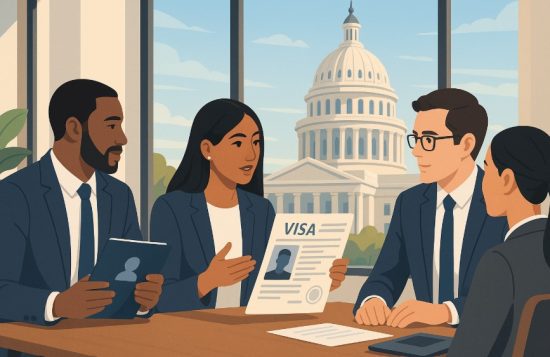
The 2025 updates to the H1B visa program have marked a significant shift in the United States’ approach to foreign skilled labor. Among the most impactful changes is the introduction of a mandatory $100,000 annual fee for each H1B petition.
This fee applies not only to new applications but also to renewal requests, creating a heavy financial burden for both employers and applicants. Additionally, the total visa duration is now capped strictly at six years, with no extensions beyond that period.
Even those already residing and working in the US under an H1B status will be subject to this timeframe. Furthermore, all H1B petitions will now be closely monitored and approved under the personal oversight of the Secretary of Labour, a historical first in visa policy enforcement.
To summarise the critical updates:
- Mandatory $100,000 annual fee for every H1B application
- Applies to both initial and renewal applications
- Visa validity strictly capped at six years
- Secretary of Labour to personally certify H1B investigations
- Enforcement through Project Firewall for stricter compliance
These measures are intended to discourage misuse of the visa system and push companies to hire locally. But the ripple effects are already being felt globally, especially in regions like the UAE that supply a high number of skilled tech professionals to the US.
Why Is the US Enforcing Stricter H1B Visa Regulations Now?
The tightening of H1B visa rules in 2025 is rooted in a broader shift in US immigration and labor policy. At the heart of this is the “America First” agenda, which aims to prioritise domestic workers over foreign talent.
The US government has argued that the H1B system was being exploited, allowing companies to replace American workers with cheaper foreign labor. President Trump’s administration has taken this stance further by introducing a series of reforms designed to realign immigration benefits toward American citizens.
The new $100,000 visa fee acts as a financial deterrent for companies relying heavily on foreign talent. By making H1B sponsorship more expensive, the US hopes to reduce dependency on overseas professionals and increase hiring from within. There’s also growing political pressure in the US to curb foreign employment amid rising job competition, particularly in the tech sector.
The government’s official messaging positions these reforms as a way to restore economic dominance and secure better job opportunities for Americans. Additionally, with the Department of Labour leading investigations into H1B misuse, companies are now under higher scrutiny than ever before.
This shift isn’t just regulatory, it’s ideological. It reflects a national pivot that puts local job markets ahead of global talent flows, directly affecting how nations like the UAE interact with the American workforce ecosystem.
How Will These H1B Visa Rule Changes Affect UAE-Based Professionals?

For tech professionals and skilled workers in the UAE, the new H1B visa rules present a set of challenges that go beyond paperwork. These changes directly impact your chances of securing employment in the United States.
The financial burden of the new annual fee alone may lead companies to reconsider hiring foreign applicants, including those based in the UAE. Professionals based in Dubai, Abu Dhabi, and other UAE cities often compete for H1B opportunities due to the country’s thriving expat talent pool.
However, these rule changes mean:
- Reduced job offers from US firms unwilling to bear the high sponsorship costs
- Shorter visa validity creating uncertainty around long-term career planning
- Limited renewal opportunities under the six-year cap
- Higher documentation and compliance expectations
Moreover, many UAE-based applicants work with outsourcing firms that used to facilitate smoother transitions to the US. With increased scrutiny under Project Firewall, even these established pathways are becoming less reliable.
Companies now face penalties for non-compliance, making them more hesitant to sponsor overseas workers. For many in the UAE, the dream of working in Silicon Valley or joining a US-based tech startup is no longer as accessible. Navigating this system requires both strategy and preparation in an increasingly competitive and restricted environment.
What Does the New H1B Fee Mean for UAE Employers?
UAE-based employers, especially those in the tech and IT sectors, are now facing major challenges if they wish to sponsor employees for work in the United States. The introduction of the $100,000 annual visa fee represents a significant cost escalation that could disrupt existing hiring and business plans.
Previously, companies operating in the UAE could use the H1B pathway to send highly skilled employees to the US for project-based work or long-term assignments. Now, the cost structure has changed dramatically.
Impacts on UAE employers include:
- Drastically increased sponsorship costs per employee
- Administrative burden with complex documentation requirements
- Potential delays in project delivery due to tighter visa approvals
- Legal exposure under Project Firewall for any compliance issues
Additionally, companies must now prove the necessity of hiring from abroad, showing that local or American talent is not available for the role. This level of documentation and validation requires significant internal resources and legal compliance, which many mid-sized UAE firms may struggle to manage.
Ultimately, the new fee is not just a financial barrier, it’s a strategic one. UAE employers must weigh the cost of sponsorship against alternatives such as remote work, local hires, or expansion into countries with more flexible immigration policies.
Can UAE Expats Still Apply for H1B Visas in 2025?

Yes, UAE-based expats can still apply for H1B visas in 2025, but the road ahead is more complex and costly. The new rules do not ban applications from the UAE or any other country, but they introduce significant limitations that must be addressed from the outset.
To apply under the new regulations, applicants must:
- Work with a US employer willing to pay the $100,000 fee
- Possess highly specialised skills in demand in the US job market
- Be prepared for a six-year maximum stay with no extension options
- Submit accurate and thorough documentation to avoid rejection
Moreover, the H1B lottery process still remains in place, meaning that even after meeting all the eligibility criteria, your application may still be subject to random selection. The odds become tougher when you factor in competition from global talent.
UAE expats who previously saw the H1B route as a dependable career move must now prepare for more rigorous scrutiny, both financially and legally. It’s no longer enough to be qualified, you must also be sponsored by a company with deep resources and a strong willingness to navigate this complex system.
Is There Any Alternative to H1B for UAE Tech Talent?
Given the increased barriers to H1B visas, UAE tech professionals are actively exploring alternative immigration routes. While the US remains a top destination, other countries now offer more accessible and cost-effective options for skilled migration.
Popular alternatives include:
- Canada’s Express Entry Program for skilled workers
- Germany’s Blue Card for high-demand tech roles
- United Kingdom’s Skilled Worker Visa targeting STEM professionals
- Australia’s General Skilled Migration Program
Some US companies are also shifting toward remote work models, allowing UAE-based talent to contribute without relocating. Additionally, niche visa programs in the US like the O-1 visa for extraordinary ability or L-1 intracompany transfer visa could provide alternate routes for qualified professionals.
The rise of digital nomad visas in countries like Portugal and Estonia also presents opportunities for tech workers in the UAE to maintain international careers without the legal complexity of an H1B. In a world where work is increasingly location-independent, these alternatives can offer both career growth and stability.
How Can UAE Applicants Stay Prepared Amid H1B Visa Uncertainty?

In a landscape where visa rules can shift dramatically, staying prepared is the smartest strategy for UAE-based applicants. The key lies in understanding the process, aligning with employer expectations, and staying legally compliant with all application requirements.
Start by building a strong professional portfolio that highlights your technical skills, certifications, and accomplishments. Employers need to justify why you are worth the $100,000 investment. Keep your documentation updated, including educational credentials, previous work experience, and project history.
Working with a reliable immigration consultant familiar with H1B procedures is also essential. They can guide you on the changing landscape and ensure you meet all compliance standards. Monitor updates from USCIS, the Department of Labour, and other official channels to stay informed.
It’s also helpful to build flexibility into your career planning. Explore US-aligned job opportunities that offer remote roles, or look into alternative visa categories that may suit your profile better. Preparation is no longer optional, it is your career safeguard.
What Is Project Firewall and How Will It Affect H1B Applications?
Project Firewall is a new US government initiative designed to crack down on abuse of the H1B visa system. Launched alongside the $100,000 fee policy, it reflects a broader move to reassert control over foreign worker programs and protect American jobs.
Key elements of Project Firewall include:
- Direct investigation authority granted to the Department of Labour
- Mandatory compliance checks for companies sponsoring H1B workers
- Penalties for violations, including fines and program bans
- Coordination with other agencies for multi-layered enforcement
One of the most striking features is the personal involvement of the Secretary of Labour in certifying investigations. This level of oversight is unprecedented and signals a more aggressive approach to policy enforcement.
For UAE applicants, this means higher scrutiny during the application process. Employers are now required to maintain impeccable compliance records, which may deter some from sponsoring foreign talent. Any suspicion of visa misuse can lead to legal investigations, fines, and reputational damage for both parties involved.
Project Firewall is not just a regulation, it’s a warning. The message is clear: the US expects full transparency and justification for every foreign worker it allows in, particularly in high-demand fields like technology.
Conclusion
The H1B visa reforms introduced in 2025 mark a pivotal shift in how the US handles skilled foreign labor. For UAE-based tech professionals and employers, these changes bring both obstacles and opportunities. Higher fees, stricter compliance, and limited durations demand more than qualifications, they require strategic planning.
While the American dream isn’t dead, it now comes with a much higher price tag and greater uncertainty. By staying informed, exploring alternative pathways, and preparing proactively, UAE professionals can still navigate this evolving landscape with confidence and clarity.
FAQs
Are UAE-based Indian expats still eligible for H1B in 2025?
Yes, they are eligible, but must meet strict criteria and be backed by employers willing to pay the new visa fee.
Will the $100,000 H1B fee apply to all applicants from the UAE?
Yes, the fee applies universally to all new and renewal petitions regardless of the applicant’s location.
Is the H1B lottery still part of the application process?
Yes, the random lottery system remains in place, adding another layer of competition to the process.
What happens if a UAE company can’t afford the new H1B fee?
They may either avoid sponsoring applicants or explore alternate hiring models like remote employment or relocation to other countries.
Can I renew my H1B visa under the new rules if I already work in the US?
Yes, but only within the six-year total cap, with no additional extensions allowed.
Are there US companies still hiring UAE-based tech professionals?
Yes, but fewer are willing to sponsor due to the higher costs and compliance risks involved.
What alternatives should UAE expats consider if H1B becomes too costly?
Consider skilled migration programs in Canada, Germany, or the UK, or pursue remote work with US firms.