
No, the war is not officially over in the region, and while the UAE is not formally at war, it remains directly affected by ongoing missile and drone attacks linked to the US and Israel conflict with Iran. You are not living in a declared war zone, but you are in a country that is on high alert amid escalating regional tensions.
Here is what you need to understand immediately:
- The UAE has intercepted missiles and drones launched in retaliation for US and Israeli strikes on Iran.
- Flights have resumed in limited numbers, but regional airspace remains unstable.
- Gulf states are considering further action if attacks continue.
- Daily life in the UAE continues, though security measures are heightened.
This situation is fluid. You should stay informed, not alarmed, and understand both the risks and the realities on the ground.
Is the War Over in the UAE Right Now?

If you are asking whether the UAE has declared war or formally entered a military conflict, the answer is no. The UAE is not officially at war. However, it has been directly impacted by retaliatory missile and drone attacks following joint US and Israeli strikes on Iran.
You are witnessing a regional conflict that has spilled into Gulf airspace. The UAE Ministry of Defense has confirmed multiple interceptions of ballistic missiles and drones.
Some projectiles fell into the sea, while others landed within state territory, causing limited casualties and injuries.
Here is what defines the current situation:
- The UAE remains on heightened military alert.
- Missile defense systems have intercepted the majority of incoming threats.
- Limited infrastructure damage has occurred, including incidents near high-profile areas.
- Diplomatic tensions with Iran have escalated, including the withdrawal of the UAE ambassador from Tehran.
You should understand that this is not a ground invasion or domestic uprising. It is a spillover effect from a broader US-Israel military campaign against Iran. The UAE is functioning, but it is operating under regional conflict conditions.
Why Is UAE Being Affected If It Is Not Directly at War?
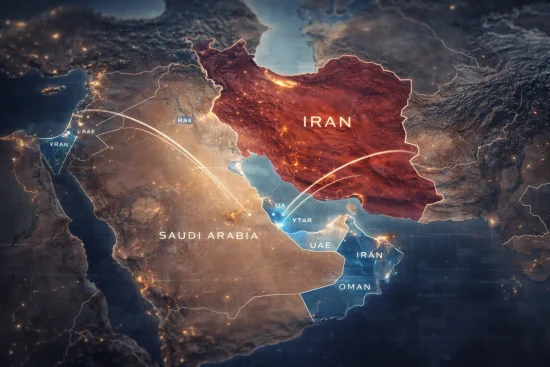
Even though the UAE did not initiate hostilities, you are living in a country that hosts strategic infrastructure, international business hubs, and regional military partnerships. That positioning makes it vulnerable during large-scale geopolitical escalations.
The conflict began when the United States and Israel launched strikes targeting Iran’s missile and nuclear capabilities. Iran responded not only toward Israel but also toward US allied nations in the Gulf.
How Did the US–Israel Strikes on Iran Trigger Regional Retaliation?
When US and Israeli forces struck Iranian military and nuclear facilities, Tehran framed its retaliation as a response to American bases operating in Gulf countries. Iranian officials argued that if US forces use regional territory, those areas become legitimate targets.
As Ali Larijani, secretary of Iran’s supreme national security council, stated, “We do not intend to attack you. But when the bases of your country are used against the United States and the United States operates in the region with its own forces, we target them.”
This explains why you have seen:
- Drone strikes targeting infrastructure across Gulf states.
- Missile launches detected over UAE airspace.
- Attacks on energy facilities in Qatar and Saudi Arabia.
- Maritime incidents in the Gulf of Oman.
The scale of the retaliation surprised many Gulf leaders. The UAE reported detecting more attacks on its territory than some other regional players.
How Many Missiles and Drones Has UAE Intercepted?
According to official defense data reported by international outlets, the UAE detected and intercepted significant numbers of threats:
- 182 ballistic missiles detected, 169 intercepted.
- 645 drones intercepted.
- Additional drones landed within the territory.
- Eight cruise missiles were destroyed.
- Casualties included several fatalities and dozens of minor injuries.
These figures show two things clearly. First, your country’s air defense systems are operational and effective. Second, the threat has been real and sustained.
Defense analyst Kelly Grieco estimated that interception costs could approach billions of dollars, as stopping a drone can cost several times more than launching one. That financial burden adds another layer to the impact you may not immediately see.
Are Missile Attacks in the UAE Still Ongoing?

You may notice that the frequency of confirmed strikes fluctuates. While the initial wave of attacks was intense, reporting suggests that the situation remains volatile rather than fully stabilized.
You are currently in a phase of uncertainty:
- Some strikes have decreased in frequency.
- Air defense systems remain active.
- Regional sirens and alerts continue in nearby Gulf states.
- US and Israeli operations inside Iran are ongoing.
President Donald Trump told CNN that a “big wave” of US action was yet to come, indicating that military operations could continue. That means retaliatory actions cannot be ruled out.
At the same time, daily life in the UAE continues. Residents report schools open, malls operating, and offices functioning. This dual reality can feel confusing. You are living in a country that is operational but strategically exposed.
It is accurate to say that the peak of shock may have passed, but the risk of further escalation has not disappeared.
What Do Flight Disruptions and Airspace Closures Tell You?
One of the clearest signs that the region is not fully stable is aviation disruption. Air travel reflects real-time risk assessment.
Dubai International Airport and Dubai World Central have resumed limited flights. Emirates has restarted select operations, prioritizing passengers with earlier bookings.
Etihad has operated some repositioning and repatriation flights, though full schedules remain disrupted.
At the same time, more than 11,000 regional flights have reportedly been canceled since the conflict began.
Countries that have closed or restricted airspace include Iraq, Jordan, Qatar, and Bahrain. This has created severe knock-on effects across east-west travel corridors.
Below is a simplified comparison:
Country Airspace Status Flight Activity Status
UAE Restricted but open Limited flights resumed
Qatar Closed temporarily Major disruptions
Bahrain Closed during alerts Reduced operations
Iraq Closed Flights halted
Jordan Closed Significant cancellations
Aviation consultant Tony Stanton told Al Jazeera that even geographically concentrated conflict can have severe global impacts because it disrupts key corridors.
If you rely on travel for business or personal reasons, you should expect uncertainty to continue until a clear de-escalation occurs.
Is the UAE Safe for Residents, Expats, and Businesses?

You may be asking whether it is safe to stay, invest, or operate a business in the UAE right now. The answer depends on how you define safety.
The UAE remains structurally stable. There is no internal unrest. Security forces are active, and missile defense systems are functioning.
However, the psychological impact has been significant. As Professor Yasser Elsheshtawy noted, when you see “plumes of smoke rising in the city,” it punctures the image of Dubai as a haven of security.
Are Schools, Malls, and Offices Operating Normally?
Yes, most daily activities continue. Residents have reported:
- Schools are open and functioning.
- Shopping malls are operating with slightly subdued atmospheres.
- Offices and business districts active.
One resident told BBC News, “Life goes on.” Another said, “We don’t live in fear.” These voices reflect resilience but also awareness.
You should recognize that visible calm does not mean zero risk. It means systems are functioning under pressure.
How Is This Affecting Investors and Markets?
Capital markets in the UAE were temporarily closed at the height of the escalation. Aviation stocks and travel-related businesses faced uncertainty.
Energy markets reacted to strikes on refineries and maritime routes. Insurance costs for airlines may increase if the conflict persists.
Key concerns for investors include:
- Rising operational costs.
- Insurance premium adjustments.
- Potential rerouting of global aviation hubs.
- Oil price volatility.
If the conflict drags on, you could see structural changes in travel patterns and logistics hubs. For now, the UAE remains one of the more resilient economies in the region, but risk perception has shifted.
Could Gulf States Enter the War Directly?
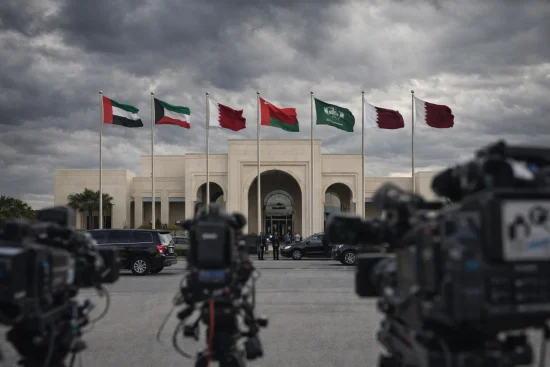
You should not ignore the diplomatic signals coming from the Gulf Cooperation Council.
A joint statement from several Gulf states warned that targeting civilians and non-combatant countries is reckless and destabilizing. The option to respond remains on the table.
This suggests:
- Gulf neutrality is under strain.
- Military retaliation remains possible if attacks continue.
- Diplomatic efforts are being reassessed.
Anger toward Iran has reportedly grown among Gulf leaders, particularly after civilian and infrastructure targets were struck.
However, entering the war directly would represent a dramatic escalation. For now, Gulf states appear focused on defense and deterrence rather than offensive engagement.
What Is the US Saying About the Duration of the Conflict?
President Donald Trump projected that the war with Iran could last four to five weeks, though he acknowledged it could go longer. He outlined objectives that include degrading missile capabilities and ending nuclear ambitions.
He stated that a “big wave” of action was still ahead, suggesting continued operations.
The US State Department has urged American citizens in multiple Middle Eastern countries, including the UAE, to depart immediately using commercial means due to serious safety risks.
You should interpret this carefully:
- The US expects further escalation.
- Military objectives are not yet complete.
- Diplomatic talks collapsed before strikes began.
US envoy Steve Witkoff described nuclear negotiations as “impossible” by the final meeting, which led to the joint military action.
This indicates that the conflict is not a short symbolic exchange but part of a broader strategic confrontation.
What Scenarios Should You Prepare For?
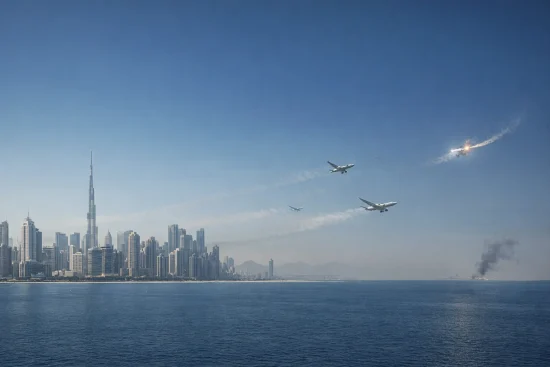
You should think in terms of scenarios rather than headlines. The future depends on military outcomes, diplomatic channels, and regional responses.
Best Case Scenario
In this scenario, US and Israeli operations achieve their objectives quickly. Iran limits further retaliation, and Gulf states avoid direct involvement.
You would likely see:
- Rapid normalization of air travel.
- Decreased missile alerts.
- Markets stabilizing.
- Diplomatic talks reopening.
This outcome would reinforce the UAE’s resilience narrative.
Medium Risk Scenario
In this case, intermittent strikes continue over several weeks. Airspace remains partially restricted, and economic disruptions persist.
You might experience:
- Continued flight delays.
- Higher insurance and shipping costs.
- Energy price volatility.
- Ongoing defense alerts.
Life would continue, but under prolonged tension.
Worst Case Scenario
This would involve Gulf states entering the conflict directly or major energy infrastructure being severely damaged.
You could see:
- Full regional airspace closures.
- Major economic slowdown.
- Expanded military operations across multiple countries.
- Significant diplomatic realignment.
While this is not the current situation, it remains a possibility if escalation accelerates.
So, Is the War Over in the UAE — Or Just Beginning?
The war is not officially over, and the region remains at risk of escalation. The UAE itself is not a declared combatant, but it has been targeted as part of a broader regional confrontation.
You are living in a country that is stable internally, yet exposed externally. Air defenses are working. Institutions are functioning. Daily life continues.
However, missile interceptions, flight disruptions, and diplomatic strain show that the threat environment has not fully stabilized.
The most accurate conclusion is this. The war is not over in the region, and while the UAE is not formally at war, it remains on alert within a volatile geopolitical landscape.
Conclusion
You are not in a collapsed state or active ground war, but you are in a region experiencing serious military escalation. The UAE has demonstrated strong defensive capability and institutional resilience. Flights are resuming gradually, businesses are operating, and daily life continues.
At the same time, missile interceptions, diplomatic tensions, and US warnings show that the situation remains fluid. Whether this conflict shortens or expands will depend on military outcomes and diplomatic recalculations in the coming weeks.
For now, the most responsible approach is awareness without panic. The war is not officially over in the region, and the risk of escalation has not disappeared. Staying informed will help you navigate whatever comes next.
FAQs
Is the UAE officially at war with Iran?
No, the UAE has not declared war on Iran. It has been affected by regional retaliation linked to US and Israeli strikes.
Are flights fully operational in Dubai now?
Flights have resumed in limited numbers. Full schedules have not yet returned to normal.
Is Dubai still safe for tourists?
Daily life continues and security systems are active. However, regional tensions remain elevated.
How long could this conflict last?
US officials have suggested several weeks, but no fixed timeline has been confirmed.
Are businesses in the UAE closing?
Most businesses remain open and operational. Some sectors, like aviation, have experienced temporary disruption.
Could oil prices rise further?
Yes, energy markets are sensitive to attacks on infrastructure and shipping routes.
Should expats consider leaving the UAE?
There is no universal directive for residents to leave. Decisions should be based on official guidance and personal risk assessment.