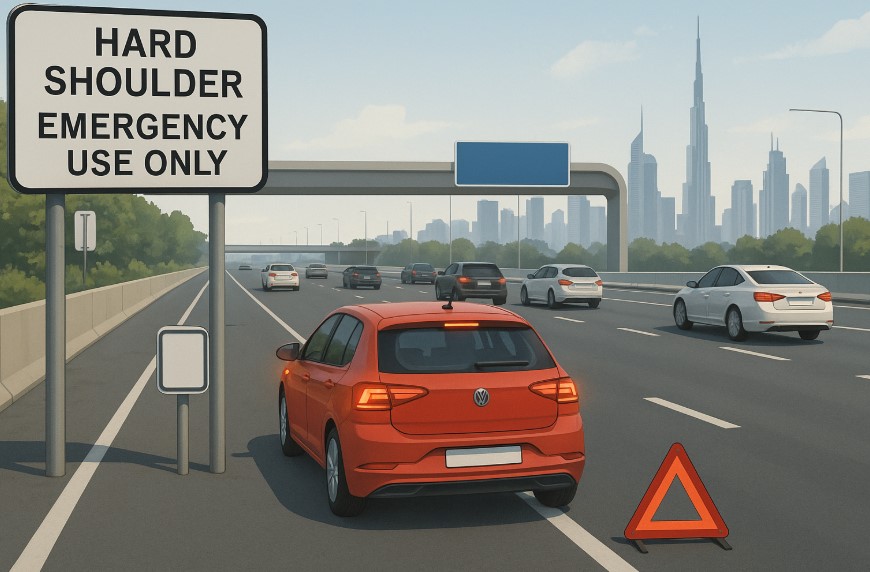
Have you ever wondered what the hard shoulder is when driving on UAE highways? This often-overlooked lane plays a crucial role in road safety and emergency management. In simple terms, the hard shoulder is the strip of road located on the far-left side of a motorway, separated by a solid white line. It’s designed to be used only during emergencies, such as breakdowns or sudden vehicle issues.
Despite its clear purpose, many drivers misuse the hard shoulder, leading to dangerous situations and hefty fines. Understanding the regulations around hard shoulder usage in the UAE can help you avoid penalties and ensure the safety of everyone on the road.
In this guide, we will explore what a hard shoulder is, its purpose, the legal implications of its misuse, and how to use it safely in the UAE.
What Is the Hard Shoulder in Driving?
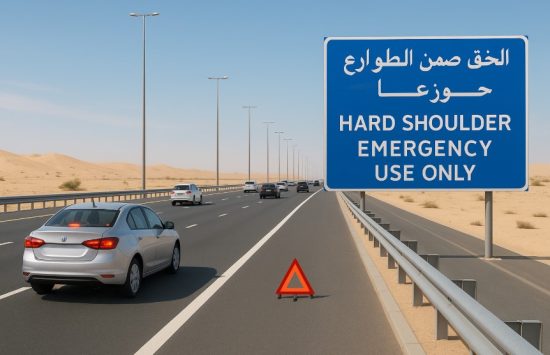
The hard shoulder is a dedicated lane on the far-left side of highways, marked by a solid white line. Its primary purpose is to provide a safe space for vehicles that experience mechanical issues or emergencies while driving. Unlike regular lanes, it is not meant for driving, overtaking, or bypassing traffic.
Key Features of the Hard Shoulder:
- It is separated from the main traffic lanes by a solid white line.
- It is reserved strictly for emergencies, such as vehicle breakdowns or medical situations.
- It also serves as a path for emergency vehicles like ambulances and police cars during traffic congestion.
- In the UAE, the hard shoulder is sometimes referred to as the “blind area” due to limited visibility for other drivers.
Misuse of the Hard Shoulder Includes:
- Overtaking slow-moving traffic.
- Stopping to make phone calls or rest.
- Allowing passengers to enter or exit the vehicle.
The UAE has strict rules against using the hard shoulder for non-emergency purposes. Violators face significant fines and black points on their driving licenses. Understanding its role and proper use can help you avoid legal troubles and maintain road safety.
Why Does the Hard Shoulder Exist on Highways?
The hard shoulder isn’t just an extra lane it serves critical functions to enhance road safety and emergency response. Its design ensures that drivers experiencing sudden mechanical failures or medical emergencies have a secure space to stop without obstructing traffic.
Reasons for Its Existence:
- Emergency Stopping Area: Allows vehicles to pull over safely during a breakdown.
- Emergency Vehicle Access: Provides a clear path for ambulances, fire trucks, and police to bypass traffic quickly.
- Accident Prevention: Prevents stationary vehicles from blocking live traffic lanes, reducing the risk of collisions.
- Traffic Flow Management: In some cases, it can be temporarily opened as a traffic lane to reduce congestion.
Additional Uses in the UAE:
- When there’s a crash or road blockage, emergency responders use the hard shoulder to access the scene faster.
- On managed motorways, it may be converted into a running lane during heavy traffic, although this is controlled by overhead signals.
Understanding the importance of the hard shoulder can help drivers appreciate its role in maintaining safety on UAE roads.
When Are You Allowed to Use the Hard Shoulder in the UAE?
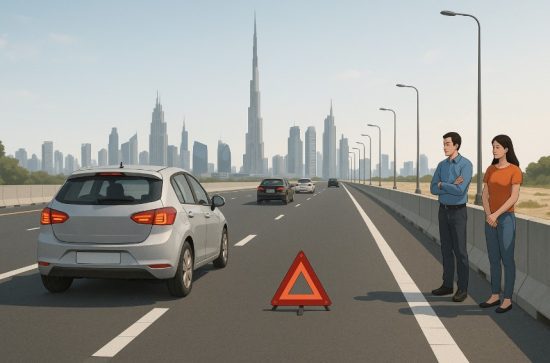
In the UAE, using the hard shoulder is strictly regulated. It is only permitted in genuine emergency situations. This includes instances like car breakdowns, medical emergencies, or when instructed by traffic authorities. Stopping on the hard shoulder for non-emergency reasons, such as answering a phone call or resting, is not allowed and is punishable by law.
The hard shoulder also serves as a passage for emergency vehicles during high-traffic periods. If you see flashing lights behind you, it is crucial to stay clear and allow these vehicles to pass.
Misusing the hard shoulder, even for a brief moment, can result in hefty fines and black points on your license. To ensure safety, only pull over if absolutely necessary and exit the vehicle to stand safely behind the barriers.
Staying aware of the rules around hard shoulder use in the UAE not only keeps you legally compliant but also contributes to the overall safety of everyone on the road.
What Are the Penalties for Misusing the Hard Shoulder in the UAE?
Misusing the hard shoulder in the UAE carries significant consequences. Authorities have implemented strict fines and black points to discourage drivers from using this emergency lane for non-critical reasons.
Penalties Include:
- AED 1,000 Fine: For driving on the hard shoulder without a valid reason.
- 6 Black Points: Added to your driving license for every offense.
- Vehicle Impoundment: The car may be impounded for up to 30 days.
- License Suspension: Repeated offenses within the same year can lead to license suspension.
Additional Fines:
- Blocking Emergency Vehicles: If caught blocking emergency response vehicles, the fine is still AED 1,000, but you receive 4 black points instead of 6.
- Overtaking Using the Hard Shoulder: This is treated as a severe violation and can result in even more stringent penalties.
Understanding these consequences helps reinforce why the hard shoulder should only be used for emergencies. Misuse not only puts you at legal risk but also endangers others on the road.
How to Safely Use the Hard Shoulder in an Emergency?
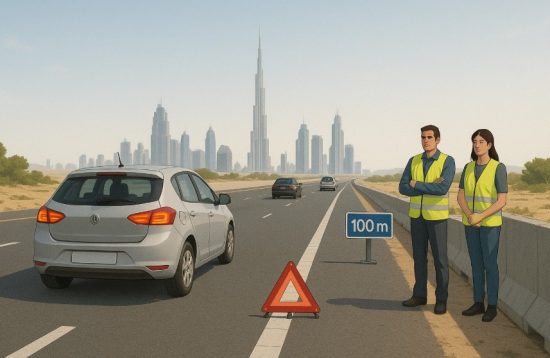
If you encounter an emergency and need to stop on the hard shoulder, safety should be your top priority. Here’s how you can do it correctly:
Steps to Follow:
- Turn on Hazard Lights: This alerts other drivers that your vehicle is in distress.
- Pull Over Gradually: Reduce speed slowly and pull over completely to the hard shoulder.
- Exit Safely: Exit the vehicle on the side away from traffic, if possible.
- Stand Behind the Barrier: Move behind the safety barrier to avoid traffic hazards.
- Place Warning Triangles: Position them 100 meters behind your car to warn approaching vehicles.
Important Safety Tips:
- Do not use the right-hand door to exit, it’s dangerous.
- Never stand close to the vehicle, especially if it’s near the traffic lane.
- Avoid staying inside the car unless absolutely necessary for safety.
Following these steps ensures your safety and the safety of others on the road.
What Alternatives Are Available If the Hard Shoulder Is Occupied?
In some cases, the hard shoulder may already be occupied, or it may not be available. Here are your options:
Alternatives:
- Emergency Stopping Zones: Designated areas marked for emergency stops.
- Service Roads: Some highways have service roads that can be used temporarily.
- Managed Lanes: In busy periods, managed lanes may act as hard shoulder substitutes.
What to Do If No Options Are Available:
- Turn on hazard lights and reduce speed gradually.
- If you cannot pull over safely, drive slowly to the nearest emergency area.
- Avoid stopping in live traffic lanes unless absolutely necessary.
Choosing the right alternative can prevent accidents and ensure you are safely out of the way of moving traffic.
What Are the Common Myths About Hard Shoulder Usage?
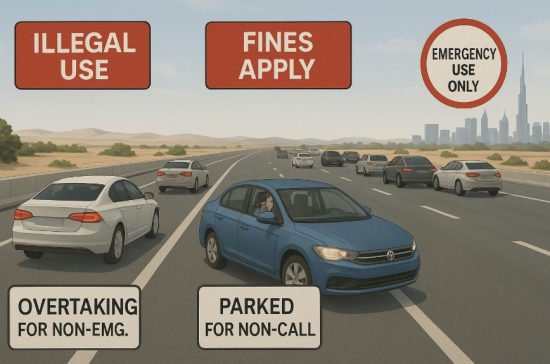
There are several misconceptions about how the hard shoulder should be used. One of the most common myths is that it can be used to skip traffic during rush hours. Many drivers believe that when traffic is congested, the hard shoulder is a convenient way to bypass slow-moving vehicles.
However, this is entirely illegal and considered a serious traffic violation in the UAE. Using the hard shoulder for overtaking not only disrupts traffic flow but also puts lives at risk, as it is reserved exclusively for emergencies.
Another widespread misconception is that it’s acceptable to park temporarily on the hard shoulder for non-emergency reasons, like answering a phone call, resting, or even taking photos.
In reality, the law only permits stopping on the hard shoulder if there is a genuine emergency, such as a car breakdown or medical situation. Any other use is punishable by fines and black points on your license.
Some drivers also assume that the hard shoulder can be used if other lanes are blocked or during extreme traffic jams. This is not true. The hard shoulder remains reserved for emergency stops and emergency vehicles, regardless of traffic conditions. Understanding these myths and avoiding misuse of the hard shoulder can prevent hefty fines and contribute to safer roads in the UAE.
Conclusion
Understanding the purpose and legal regulations of the hard shoulder is essential for safe driving on UAE highways. This dedicated lane is reserved strictly for emergencies, such as vehicle breakdowns or medical crises, and serves as a vital pathway for emergency vehicles.
Misusing it not only disrupts traffic flow but also poses serious safety risks, leading to heavy fines, black points, and even vehicle impoundment. Knowing when and how to use the hard shoulder correctly can help prevent accidents and ensure smooth passage for emergency responders.
By respecting its purpose and following UAE traffic laws, you contribute to a safer driving environment for everyone. Always remember that the hard shoulder is not an escape from traffic—it’s a lifeline for emergencies. Drive responsibly and keep the roads safe for all.
FAQs
Is it legal to drive on the hard shoulder to avoid traffic in the UAE?
No, driving on the hard shoulder to bypass traffic is illegal and results in heavy fines and black points.
Can you stop on the hard shoulder for non-emergency reasons?
No, the hard shoulder is strictly for emergencies such as breakdowns or medical issues.
Are there cameras monitoring hard shoulder misuse in the UAE?
Yes, the UAE has traffic cameras to monitor violations, including illegal use of the hard shoulder.
What should you do if you break down on a road without a hard shoulder?
You should turn on your hazard lights and pull over to the nearest safe area if available.
Does UAE law allow motorcycles to use the hard shoulder?
No, motorcycles are also prohibited from using the hard shoulder unless it’s an emergency.
What is the difference between a hard shoulder and an emergency lane?
A hard shoulder is a permanent emergency lane on highways, while emergency lanes are specially marked areas.
Are there exceptions to hard shoulder usage during heavy traffic?
No, even during heavy traffic, using the hard shoulder for driving is not permitted.