Have you ever wondered how social media influencers in Dubai legally earn money from their online presence? If you’re planning to monetize your content, collaborate with brands, or even build a full-time career as a digital creator in the UAE, getting an influencer license is a legal necessity.
The UAE, and particularly Dubai, has established clear regulations to professionalise and monitor online promotional activities. With influencer marketing booming in the region and over 11.5 million social media users, securing the right license can open doors to income, recognition, and long-term business growth.
Whether you’re a micro-influencer on Instagram, a YouTuber, or a full-fledged agency managing talents, knowing the cost of an influencer license in Dubai is the first step toward legitimate success.
This guide will walk you through everything you need to know about the influencer license Dubai cost and how to get started.
What Is an Influencer License in Dubai?
An influencer license in Dubai is an official permit that allows individuals or companies to legally promote products, services, or brands on social media.
Issued by the UAE Media Council (previously the National Media Council or NMC), this license is mandatory for anyone earning income through sponsored content or advertisements on platforms like Instagram, TikTok, or YouTube. It also applies to bloggers, vloggers, podcasters, and digital marketers.
This license is commonly referred to as the E-Media License, and it regulates commercial content creation across various digital platforms. It ensures that creators comply with the UAE’s advertising, decency, and media laws.
By holding this license, influencers gain the legal authority to collaborate with brands and run monetized campaigns without the risk of fines or content takedowns.
Influencers who do not obtain this license could face fines of up to AED 5,000, suspension of social media accounts, and even blacklisting by the UAE’s media authorities. Whether you’re an individual creator or part of an agency, this license is essential for professional growth, compliance, and credibility.
Why Do You Need an Influencer License in the UAE?
Having an influencer license in the UAE is not just a legal requirement, it’s also a strategic move for your personal brand and business. This license enhances your legitimacy in the eyes of clients and protects your career in a tightly regulated digital space.
Here’s why getting the license is vital:
- Legal Protection: Operating without a license can lead to fines of AED 5,000, account suspension, or permanent removal from platforms.
- Brand Trust: Licensed influencers are seen as professionals, which increases their chances of securing collaborations with top brands.
- Visa and Residency: Holding a trade license makes you eligible for a UAE residency visa, which provides long-term living and working opportunities in the country.
- Business Credibility: You’ll have access to business banking services, which adds professionalism and financial security to your influencer career.
- Regulatory Compliance: You’ll comply with UAE content laws, including rules on promoting products, disclosing sponsorships, and adhering to ethical guidelines.
- Monetisation Freedom: With a valid license, you can safely monetize content through affiliate links, product placements, e-commerce shops, or ad revenue.
Securing an influencer license not only keeps you legally safe but also boosts your opportunities for sustainable success in the UAE market.
How Much Does an Influencer License Cost in Dubai?
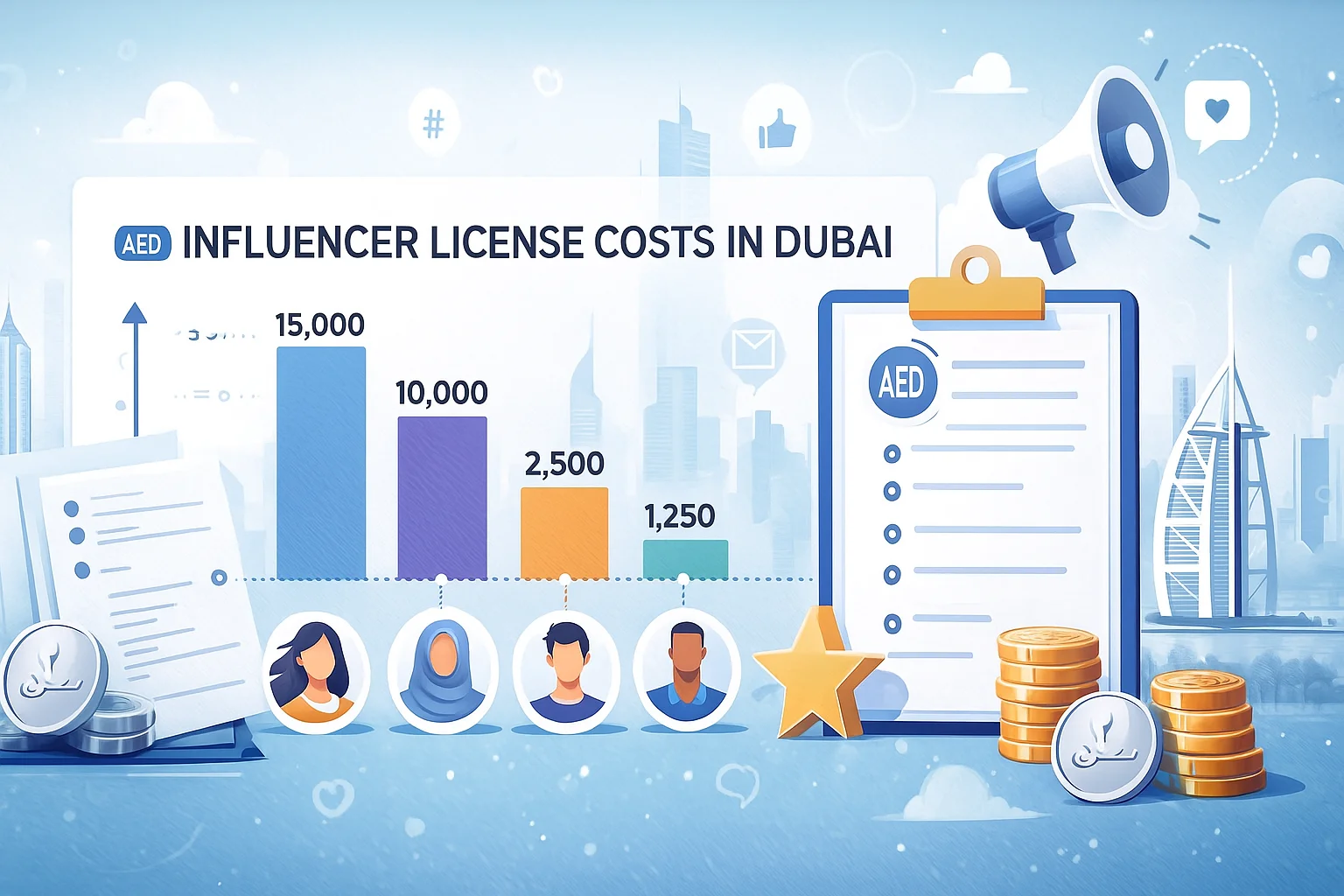
The influencer license Dubai cost varies depending on the license type, business setup, and location (free zone or mainland). Costs can range from AED 1,000 to over AED 30,000 per year.
The basic E-Media Permit from the UAE Media Council costs AED 1,000, but it must be paired with a commercial trade license to operate legally.
Here’s a detailed cost breakdown based on license types and services:
| License Type / Fee | Cost (AED) | Details |
| NMC E-Media Permit | 1,000/year | Mandatory for influencers earning from paid content |
| Freelancer License | 5,000 – 15,000/year | Cost varies by free zone (e.g. SHAMS, IFZA) |
| E-Commerce/Media License | 10,000 – 20,000/year | For influencers selling products or creating video content |
| Marketing & PR License | 15,000 – 25,000/year | For offering consultancy, digital services, etc. |
| Agency License | 20,000 – 30,000+/year | Required for companies managing multiple influencers |
| Visa and Residency Application | 3,000 – 5,000 | Emirates ID, medical fitness test included |
| Admin/Govt Fees & VAT | 1,000 – 3,000+ | Additional costs depending on jurisdiction |
Additional costs may include health insurance, business setup assistance, and virtual office space (for mainland licenses). It’s important to note that license renewals match the initial cost annually, so influencers should budget accordingly.
Understanding these costs helps you plan better and avoid unexpected financial obligations when entering the influencer industry in the UAE.
What Factors Influence the Cost of an Influencer License in Dubai?
Several elements directly impact the overall influencer license Dubai cost, and understanding these factors is essential when planning your application or budget. While the starting cost may appear straightforward, various components can increase or decrease the final amount you’ll pay.
Here are the main factors that determine your total license cost:
- Type of License Chosen: A freelancer license is typically more affordable compared to an agency license, which requires more extensive documentation and a larger setup.
- Business Location: Free zones like SHAMS or IFZA offer more cost-effective solutions, while mainland licenses issued by the Dubai DED tend to have higher government fees and require physical office space.
- Scope of Work: If you’re running multiple campaigns or managing content creators, your license type must reflect that, which increases costs.
- Visa Requirements: Applying for a residency visa, Emirates ID, and medical testing adds AED 3,000 to AED 5,000.
- Administrative & Professional Fees: If you hire a business setup consultant, you’ll also incur service charges.
- VAT Eligibility: Earning over AED 375,000 annually requires VAT registration, affecting your financial planning.
- Renewal Charges: Every influencer license must be renewed annually, and costs are typically the same as the initial fees.
These factors should be evaluated carefully to avoid surprises later. By understanding what influences the total, you can choose the most cost-effective option that fits your content creation goals.
What Are the Different Types of Influencer Licenses Available in the UAE?
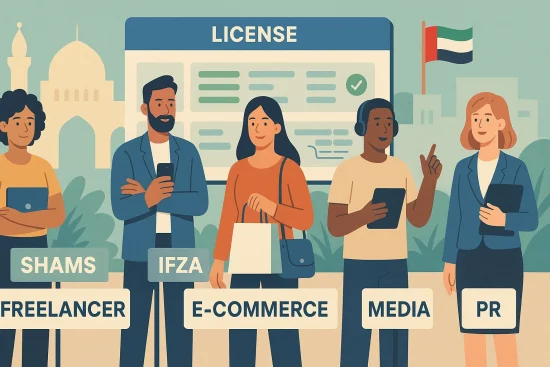
Dubai offers various influencer license types to suit different business models and content creation goals. These licenses are available through free zones and the mainland, with each offering unique benefits.
Choosing the right license is essential for ensuring regulatory compliance, securing brand deals, and maintaining a smooth business operation. Let’s explore the five main influencer license types in the UAE.
1. Freelancer Permit
The freelancer permit is ideal for individual influencers, vloggers, or creators who wish to work independently. This license allows you to operate without forming a company and is available in multiple free zones, including SHAMS, Meydan, and twofour54.
It’s one of the most affordable and flexible options, offering low startup costs, fewer administrative burdens, and 100 percent ownership.
You can use this permit to legally earn from sponsored content, affiliate marketing, and advertising. Most solo influencers and micro-creators prefer this permit for its simplicity and low risk.
2. E-Commerce License
If your content strategy involves selling products or services via social media, then an e-commerce license is the best fit. Whether you operate an Instagram shop, use TikTok to promote a product, or engage in affiliate marketing, this license gives you legal grounds to do so.
Issued by authorities like IFZA and Dubai DED, the e-commerce license is slightly more expensive than a freelancer permit but offers broader business options.
You’ll also gain access to corporate banking and online payment platforms. This license is essential for influencers involved in product-based or transaction-based content.
3. Media License
For creators focused on video production, podcasting, or any kind of audiovisual content, the media license is most suitable. Offered by Sharjah Media City (SHAMS) and twofour54 Abu Dhabi, it supports the technical and creative aspects of content generation.
You can use this license to legally produce and monetize YouTube videos, long-form content, or branded storytelling. It may require media-related documentation or content strategy outlines, especially for larger setups.
This license is best for creators who need equipment-heavy production or are involved in full-scale video or audio content.
4. Marketing & PR License
Some influencers evolve into digital consultants, handling branding, content strategy, and promotional campaigns for other businesses. If this sounds like your model, a Marketing & PR license from zones like Fujairah Creative City or Dubai Media City is a perfect fit.
This license allows you to offer digital services, manage client accounts, and handle campaign executions. It’s higher in cost but expands your potential income sources through service-based billing. For influencers turning into strategists or managing multiple brands, this is the most professional choice.
5. Agency License
The agency license is built for influencer marketing companies managing multiple influencers, digital campaigns, and large-scale projects. Offered through both mainland and free zones, this license requires complete company formation, physical office space (if mainland), and possibly staff employment.
The cost can go above AED 30,000, but it allows for unlimited operational scalability. This is the best choice for agencies representing talent, handling legal contracts, and providing full-service influencer marketing solutions. It’s a long-term investment suited for advanced business models.
How to Apply for an Influencer License in Dubai (Step-by-Step)?
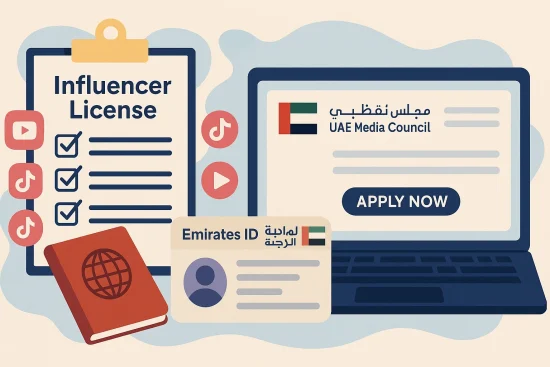
Applying for an influencer license in Dubai follows a structured process that ensures you meet the UAE Media Council’s requirements. Understanding each stage helps you prepare your documents and choose the right business setup without delays.
The steps are designed to support influencers of all levels, from beginners to established creators operating across multiple platforms. The process is straightforward if you follow each step carefully and submit accurate information.
To get started, you must first choose whether you want to operate from a free zone or through the mainland. Free zones offer faster approvals and affordable packages, while the mainland offers full access to the UAE market. Once you choose your location, you can move forward with the remaining steps.
Here are the main steps to apply:
- Select a business location in a free zone or mainland.
- Choose the appropriate license type that suits your content model.
- Prepare your passport, residency details, business plan, and social media links.
- Submit your trade license application through the free zone portal or Dubai DED.
- Apply for the E-Media Permit from the UAE Media Council.
- Pay the required fees for your license and permit.
- Complete your visa process if needed, including medical tests and Emirates ID.
Completing these steps gives you full legal authority to monetize content and work with brands in Dubai.
What Documents Are Required for an Influencer License in the UAE?
The UAE requires specific documents before issuing an influencer license, ensuring that applicants meet identity, residency, and business requirements. Gathering these documents early can help speed up your application process and reduce the chances of delays.
The list is similar across free zones and mainland authorities, although some locations may request additional information depending on your business model. Influencers who plan to operate as individuals typically need fewer documents, while agencies and larger entities may require more.
You must ensure your identification documents are valid and that you can clearly demonstrate your content activities. Authorities also require proof of residency or accommodation, even if you are applying as a freelancer. If you are employed, you will need a no-objection certificate to confirm that your influencer work does not conflict with your current employment.
The following documents are typically required:
- Valid passport copy with residency details if applicable.
- Emirates ID for UAE residents.
- Passport-size photo for identification.
- Proof of address, such as tenancy contract or utility bill.
- NOC from your employer if you are sponsored by a company.
- Social media profile links to show your influencer activity.
- Business plan outlining your influencer services and goals.
- Company registration documents for agency applicants.
These documents help authorities verify your identity and ensure that your influencer activities meet regulatory guidelines.
Free Zone vs Mainland License – Which Is Better for Influencers?
Choosing between a free zone and mainland license is one of the biggest decisions you will make when applying for your influencer license. Each option offers unique benefits, and the right choice depends on your goals, business size, and target audience.
Free zones are popular among solo influencers because they offer fast setup, competitive pricing, and 100 percent business ownership. Mainland licenses are preferred by agencies and influencers who work directly with UAE-based brands and require broader operational freedom.
Both options allow you to apply for the E-Media Permit, which is required for monetized content. Free zone licenses are ideal for creators focused on international collaborations, remote work, or digital-first business models. They are also more flexible when it comes to visa allocation and company structures.
Mainland licenses offer unrestricted business access within the UAE but require physical office space and may involve more administrative steps. Your choice should match your content strategy and business growth plans. Understanding the advantages of both options helps you make a confident and informed decision.
Comparison Table:
| Feature | Free Zone License | Mainland License |
| Cost Range | Lower and budget friendly | Higher due to office requirements |
| Ownership | 100 percent foreign ownership | Full UAE market access |
| Setup Speed | Fast approvals with simple steps | Longer process with more requirements |
| Office Requirement | Not required for many packages | Mandatory physical space |
| Best For | Freelancers and digital creators | Agencies and local brand partnerships |
Both options support influencer activities, but your choice should align with your long-term content creation targets.
What’s New in UAE Influencer Regulations in 2025?
The influencer landscape in the UAE is evolving rapidly, and 2025 has brought several key regulatory updates to ensure higher transparency and professionalism in the industry. These new rules were introduced by the UAE Media Council, focusing on content control, advertising ethics, and international compliance.
Whether you’re an established influencer or just getting started, staying aware of these changes is critical to avoid penalties and grow your brand safely.
Here’s what you need to know about the latest influencer rules in 2025:
- Advertiser Permit Introduced: All influencers, whether paid or unpaid, now need an Advertiser Permit in addition to a trade license. It is free for the first three years.
- Age Requirement: You must be at least 18 years old to apply for an influencer license or Advertiser Permit.
- International Access: Non-residents and international influencers can now apply for licenses through UAE free zones.
- Faster Approvals: Free zones like Meydan Free Zone offer same-day approvals for influencer licenses with options like the Fawri License.
- Stricter Penalties: Failing to obtain proper licensing can lead to fines up to AED 5,000, content takedowns, or blacklisting.
- Content Compliance: Influencers must disclose paid promotions, avoid sensitive topics, and follow UAE advertising guidelines.
These new rules make it easier and more accessible to become a licensed influencer while maintaining high professional standards across platforms.
How Does the UAE Influencer License Support Content Monetisation?
Obtaining a UAE influencer license is more than a legal formality—it’s a direct path to professional content monetisation. The license allows influencers to legally generate revenue through various income streams and eliminates risks of legal complications or brand hesitancy.
Once licensed, influencers gain access to brand sponsorships, affiliate marketing programs, paid content partnerships, and e-commerce integrations. It opens doors to business banking services, allowing you to receive payments officially and maintain professional credibility.
In addition, the trade license provides eligibility for UAE residency visas, giving long-term living rights and benefits such as health insurance and taxation clarity.
This structure not only protects influencers but also promotes a sustainable ecosystem where creators can operate as legitimate businesses. Whether you’re collaborating with international companies or launching your own brand, licensing gives you full legal backing to earn from your digital efforts in the UAE.
Platform-Specific Licensing Rules in the UAE
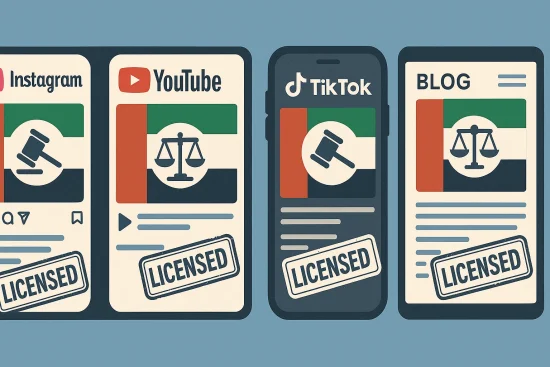
The UAE has platform-specific rules that influencers must follow based on where and how they create content. Each platform, Instagram, YouTube, TikTok, and blogs, has its own licensing expectations under the UAE Media Council’s regulations.
If you’re monetizing on any of these platforms, understanding the specific requirements is essential to remain compliant and continue growing your audience legally.
Let’s break it down platform by platform:
Instagram: Disclosures, e-commerce licensing
Instagram influencers must clearly disclose sponsored content using labels like #ad or Paid Partnership. This is required under UAE law to maintain transparency and protect consumers from misleading promotions.
If you sell physical or digital products via Instagram shops, you must also acquire an e-commerce license. Without it, any product sales or promotions tied to income can result in fines or account suspension. Instagram also falls under the E-Media License requirement, meaning all paid posts, partnerships, or influencer promotions must be licensed.
YouTube: Need media license for monetized content
YouTube creators in the UAE who earn revenue from their channels must hold a media license. Whether your channel is monetized through ads, brand integrations, or sponsorships, the UAE requires influencers to be legally registered.
This is particularly important for vloggers, filmmakers, and podcasters, as their content falls under the media production category. Platforms like twofour54 and SHAMS are ideal for creators who want to produce long-form or high-quality video content with full regulatory support.
TikTok: Content rules and licensing
TikTok influencers are required to hold a trade license and Advertiser Permit if they are involved in paid collaborations or product promotions. The platform’s short-form content still falls under the E-Media License framework, especially if it includes sponsored music, affiliate links, or visual advertisements.
In addition, TikTok creators must avoid sensitive topics such as politics, religion, or adult content, as the UAE has strict content regulations. Following these rules not only protects your account but also helps build trust with brands and followers.
Blogs: Licensing for monetised content
Bloggers operating in the UAE must have an influencer license if they earn money from ads, affiliate links, or sponsored posts. Unpaid hobby blogs don’t require a license, but the moment a blog is monetised, it’s considered a business activity under UAE law.
If you’re writing articles, promoting products, or running advertising campaigns on your blog, you must register your site and obtain the relevant license.
This applies to self-hosted blogs and platforms like WordPress, Medium, or Substack. Understanding platform-specific rules ensures that you stay legally compliant and can
How to Stay Compliant with UAE Influencer Laws?
Once you obtain your influencer license in Dubai, staying compliant with UAE laws is crucial to avoid fines and ensure your long-term success.
Compliance involves more than just getting the license, it also includes adhering to content guidelines, renewing your license on time, and maintaining financial records. Influencers who fail to meet these responsibilities risk penalties, content takedowns, or blacklisting by regulatory authorities.
To remain compliant, it’s essential to disclose sponsored content, register for VAT if required, and maintain transparency in all commercial engagements.
Influencers must also keep their content respectful of UAE cultural, religious, and social values. Monitoring your income and submitting renewals ahead of time will help you stay in good standing with the UAE Media Council.
Key practices to stay compliant:
- Clearly label all sponsored content and partnerships.
- Renew your trade license and E-Media Permit annually.
- Register for VAT if your earnings exceed AED 375,000.
- Maintain accurate records of all income and contracts.
- Avoid publishing offensive or non-compliant content.
- Adhere to age restrictions and use only licensed media content.
- Keep your business information updated with free zone or DED authorities.
Following these rules ensures your influencer career in Dubai remains both legal and sustainable.
Conclusion
Navigating the influencer license Dubai cost is the first step toward building a legitimate and thriving content business in the UAE. With social media playing a pivotal role in the region’s economy, influencers have incredible opportunities to grow their brand, if they operate within the legal framework.
Whether you’re a solo creator, e-commerce marketer, or agency, Dubai offers several flexible licensing options to support your ambitions.
By securing the appropriate license and staying compliant with updated regulations like the Advertiser Permit, you unlock access to brand collaborations, residency visas, and financial services that elevate your content game.
Choosing between a free zone and mainland setup depends on your business goals, but both offer viable paths.
Now is the best time to professionalise your digital presence, secure your legal standing, and tap into the UAE’s growing influencer economy. Get started today, and turn your creative passion into a successful licensed business in Dubai.
FAQs
What’s the cheapest way to get an influencer license in Dubai?
The most affordable option is a freelancer license in a free zone, starting from around AED 5,000 plus AED 1,000 for the E-Media Permit.
Can expats apply for an influencer license in the UAE?
Yes, both residents and non-residents can apply through free zones like SHAMS or IFZA with international access now supported.
Is a license valid for all Emirates or just Dubai?
Licenses issued in free zones typically cover the entire UAE, but some mainland licenses may be restricted based on jurisdiction.
What happens if I forget to renew my license?
Failure to renew can lead to fines, business suspension, or loss of legal eligibility to monetize your content.
Do hobby bloggers or non-paid influencers need a license?
No, if you’re not earning money, you don’t need a license, but once your content is monetized, licensing is mandatory.
Can I upgrade from a freelancer to an agency license later?
Yes, you can transition to a company setup or agency license as your business grows by submitting updated documents.
Is social media content without licensing monitored in the UAE?
Yes, unlicensed content can be flagged by the UAE Media Council, resulting in takedowns or penalties up to AED 5,000.