
Have you ever wondered what happens when your UAE employment comes to an end? Whether you are an employee or employer, understanding the employment visa cancellation process in the UAE is crucial. It’s not just about paperwork, it’s about safeguarding your legal status, finances, and future opportunities.
Every step, from submitting a cancellation request to exiting the country, carries important details you should not overlook. This blog will walk you through everything you need to know about employment visa cancellation in the UAE, using up-to-date information from official sources like MOHRE and expert insights. By the end, you will have a clear understanding of your rights, obligations, timelines, and costs.
Let’s break it down in a way that’s practical, easy to follow, and directly useful to you, whether you are leaving your job or managing employees in the UAE.
What Is Employment Visa Cancellation in the UAE?

Employment visa cancellation in the UAE refers to the formal process of ending a work permit and residence visa tied to an employment contract. This cancellation ensures the employee is no longer legally bound to the employer and is required before leaving the country or switching jobs. The process must comply with UAE labor laws and is typically carried out by the employer, although the employee’s cooperation is needed.
When a work permit is canceled, it includes the termination of the labor contract registered with the Ministry of Human Resources and Emiratisation (MOHRE) and the cancellation of the residence visa with the Federal Authority for Identity, Citizenship, Customs and Ports Security. This process protects both parties by confirming that final settlements, dues, and obligations have been met.
A key part of cancellation is ensuring all documentation is completed correctly. This includes the cancellation request form, the employee’s passport, Emirates ID, and other relevant documents depending on the case. Without proper cancellation, both the employer and employee may face legal or financial penalties, making this process essential.
Why Might Your Employment Visa Be Cancelled?
Understanding why employment visas are canceled in the UAE helps you prepare and avoid surprises. Below are the main reasons, categorized by who initiates the cancellation.
Employer-initiated Reasons
- Termination of employment due to performance or restructuring
- Redundancy or company downsizing
- Business closure or change in company legal status
- Administrative deportation ordered by government authorities
Employers are responsible for submitting the cancellation request through official channels and covering any related processing steps.
Employee-initiated Reasons
- Resignation submitted following contractual terms
- Changing jobs within the UAE with a new employer sponsoring the visa
- Moving abroad permanently for personal or family reasons
Employees are required to comply with notice periods and settlement procedures as per UAE labor law before cancellation proceeds.
End of Employment Contract
- Completion of a fixed-term contract without renewal
- Mutual agreement between employer and employee to end the contract
In all cases, both parties must ensure that the employee’s final salary, benefits, and entitlements are cleared, and the employee’s signature confirming receipt of dues is often mandatory.
The reason behind the cancellation influences the steps and documentation required, so knowing your category is essential.
How Does the UAE Employment Visa Cancellation Process Work?
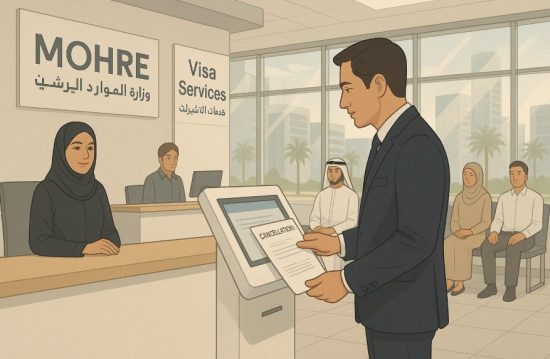
Understanding how the UAE employment visa cancellation process works is essential for both employers and employees. This process involves several official steps, and missing any of them can cause delays or legal issues. Let’s break it down clearly.
Step 1: Employer Submits Cancellation Request
The first step starts with the employer. The employer logs into the MOHRE portal using UAE Pass or visits a service center to submit a cancellation application.
This application includes essential documents like the Ministry-issued cancellation form, employee’s passport copy, Emirates ID, and any specific paperwork depending on the case, such as a medical fitness form or death certificate if applicable. For workers outside the country or deceased employees, special conditions apply, but the employer still handles the submission.
Step 2: Work Permit Cancellation via MOHRE
Once the application is submitted, MOHRE reviews the request. They check if all requirements are met, including whether the employee’s final dues are cleared. The employer must provide an official statement confirming payment of all benefits, and the employee’s signed acknowledgment is usually required.
If there are any fines for late renewals or other issues, they must be paid at this stage. The Ministry will either approve or request missing documents, and the employer will be notified upon completion.
Step 3: Immigration Clearance and Exit Procedures
After the work permit is canceled, the employer or employee proceeds to cancel the residence visa with the Federal Authority for Identity, Citizenship, Customs and Ports Security. This step ensures the employee is officially cleared to exit the UAE or transfer to another employer. Once this is completed, the visa status updates in the system, and the individual either leaves the country or begins a new employment process.
What Documents Are Required for Employment Visa Cancellation?
When it comes to employment visa cancellation in the UAE, having the right documents prepared is essential to avoid delays and ensure smooth processing. Both employers and employees play a role in providing the necessary paperwork, which can vary depending on the reason for cancellation.
The main document is the official cancellation request form issued by MOHRE, which must be signed by both the employer and employee. For cases where the employee is overseas, deceased, or subject to administrative deportation, the employee’s signature may not be required, but supporting documents such as a death certificate or deportation order must be attached.
Other essential documents include:
- Copy of the employee’s passport
- Emirates ID
- Medical fitness form if the cancellation is due to health reasons
- Any additional forms based on the specific case
The employer must also submit proof that all employee dues have been paid. Ensuring all documents are complete helps speed up the process and prevents potential legal or administrative issues.
What Are the Employer’s Obligations During Visa Cancellation?

During the employment visa cancellation process, employers in the UAE have several critical obligations. These responsibilities ensure the process is completed fairly and in compliance with UAE labor laws.
First, the employer must settle all pending dues, including final salary, unused leave, end-of-service benefits, and any other financial entitlements. An official statement confirming full payment is required, and in most cases, the employee’s signature acknowledging receipt is needed.
Key obligations include:
- Submitting the cancellation request through MOHRE channels
- Paying any fines related to delayed renewals or documentation
- Ensuring all documents, including the signed cancellation form, are accurate
- Covering cancellation processing costs where applicable
Employers also need to provide support for residence visa cancellation and ensure the employee can either leave the UAE or transfer to a new sponsor without unnecessary delays. Fulfilling these obligations protects the employer from legal disputes and ensures the employee’s departure or transfer is smooth.
What Rights Do You Have as an Employee?
As an employee in the UAE, you have defined rights during the visa cancellation process, designed to protect your legal and financial interests. These rights ensure you are treated fairly as your employment ends.
You have the right to receive:
- Full payment of your final salary
- End-of-service benefits as per your contract and labor law
- Payment for any unused annual leave
- A copy of your cancellation documents for your records
Additionally, you are entitled to a grace period after your visa is canceled, typically 30 days, allowing you to exit the country or secure a new job. You also have the right to refuse signing the cancellation form if dues are unpaid. Understanding these rights helps you advocate for yourself and avoid exploitation, ensuring you can move forward confidently after leaving your job.
How Long Does Employment Visa Cancellation Take in the UAE?

The timeline for employment visa cancellation in the UAE is relatively efficient, but it depends on how well both parties prepare. Typically, the entire process takes about two working days when all documents are in order.
Key timing factors include:
- Submission of complete documents by the employer
- Review and approval by MOHRE
- Payment of any outstanding fines or dues
Once the work permit is canceled through MOHRE, the residence visa cancellation with the Federal Authority for Identity, Citizenship, Customs and Ports Security can proceed, often completed within a day.
Employees should note that delays can occur if documents are missing or fines are unpaid. By ensuring all steps are properly handled, the process can move smoothly, helping employees transition or exit without issues.
How Much Does It Cost to Cancel an Employment Visa in the UAE?
While canceling an employment visa in the UAE is generally affordable, knowing the cost breakdown helps avoid surprises. The MOHRE service itself is free of charge when done online, but business centers may charge a capped commission, currently set at around 72 dirhams.
Other possible costs include:
- Payment of fines for late renewals or non-compliance
- Typing center service fees if using in-person channels
- Travel expenses if the employee needs to leave the country
Employers usually cover the direct costs of cancellation, but employees may need to manage personal expenses related to their exit or job change. Clarifying in advance who pays for what helps both parties avoid misunderstandings and ensures a smooth final settlement.
What Happens After Your UAE Visa Is Cancelled?

Once your UAE visa is canceled, you enter a transition period that determines your next steps. Most employees receive a 30-day grace period to either leave the country or transfer to a new sponsor.
During this time, you should:
- Secure a new job if staying in the UAE
- Finalize your departure if leaving the country permanently
- Ensure all financial matters, including bank accounts and utilities, are settled
If you overstay beyond the grace period, fines may apply. For employees switching employers, the new company will handle the fresh visa application, ensuring you remain legally employed. Understanding what follows after cancellation allows you to plan effectively and avoid last-minute issues that could impact your stay or future opportunities.
How Can You Avoid Problems During Visa Cancellation?
Avoiding problems during visa cancellation in the UAE is all about preparation and clear communication. Both employees and employers should understand their responsibilities and work cooperatively.
Practical tips include:
- Double-checking all required documents before submission
- Clearing all pending payments, fines, or fees in advance
- Keeping a written record of all agreements and settlements
Employees should also avoid last-minute disputes or refusing to sign forms without valid reasons, while employers should ensure fair treatment and timely processing. Staying informed about the process helps both sides complete the cancellation smoothly, avoiding legal trouble or unnecessary stress. Planning ahead ensures you move on to your next chapter with confidence and peace of mind.
Conclusion
Navigating the employment visa cancellation process in the UAE might seem overwhelming, but with the right information, it becomes manageable and straightforward.
By understanding the reasons for cancellation, knowing the required steps, and respecting the obligations and rights of both parties, you can ensure a fair and smooth process.
For employers, it’s about compliance and proper documentation, while for employees, it’s about securing your dues and planning your next move.
Whether you are leaving the UAE or transitioning to a new job, proper handling of visa cancellation helps you avoid penalties, legal issues, and last-minute complications. By staying informed and proactive, you can turn this formal procedure into an easy and positive experience.
FAQs
What is the grace period after UAE employment visa cancellation?
You typically get a 30-day grace period to stay, transfer, or exit after visa cancellation.
Who pays the employment visa cancellation fee in the UAE?
Usually, the employer covers cancellation fees, but personal exit costs are on the employee.
Can I transfer to another employer without leaving the UAE?
Yes, you can transfer to a new sponsor within the grace period without leaving the country.
What happens if I overstay after visa cancellation in the UAE?
Overstaying leads to fines and possible legal issues, so always leave or transfer on time.
Do I need to sign anything during the visa cancellation process?
Yes, you usually sign a cancellation form confirming receipt of all final dues and benefits.
How do I check if my visa has been canceled in the UAE?
You can check visa status online through the MOHRE portal or the Federal Authority website.
What should I do if my employer refuses to cancel my visa?
You can file a complaint with MOHRE to resolve disputes and ensure legal cancellation.