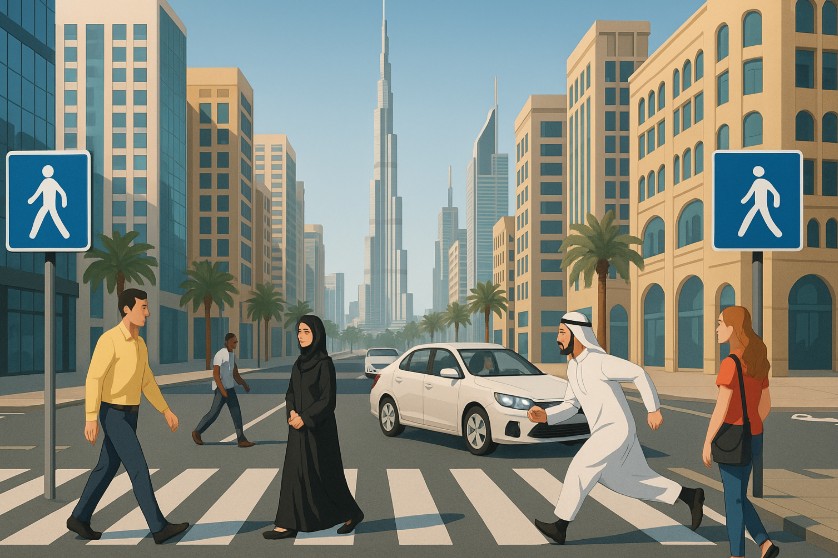
Ever crossed the road in Dubai without using a crosswalk or waiting for the pedestrian signal? If so, you’ve likely jaywalked, an act that can now cost you a hefty fine. Dubai takes road safety very seriously, and jaywalking laws are strictly enforced to protect both pedestrians and drivers.
In a city known for its cutting-edge infrastructure and orderly traffic systems, following pedestrian rules isn’t just encouraged, it’s required. The penalties for jaywalking have been updated for 2025, and they’re more serious than ever before.
With thousands of violations recorded each year and increasing pedestrian accidents, Dubai authorities have intensified enforcement, including round-the-clock monitoring. Whether you’re a resident or a tourist, knowing the rules could save you from fines, legal issues, or even accidents. This guide explores what counts as jaywalking, the associated fines, and how you can avoid them while walking safely in the city.
What Is Considered Jaywalking in Dubai?

Jaywalking in Dubai refers to crossing the road in an illegal or unsafe manner. This includes ignoring pedestrian signals or using non-designated crossing points. With increasing efforts to reduce accidents, authorities classify several actions under jaywalking to enforce discipline on the roads.
Some common forms of jaywalking include:
- Crossing the street without using zebra crossings or pedestrian bridges
- Walking across intersections when the pedestrian light is red
- Stepping onto the road from behind parked vehicles or obstacles
- Using bicycle lanes as walking paths
- Failing to check both directions before crossing, even at designated spots
- Using mobile phones or headphones while crossing roads
These behaviours not only endanger the person crossing but also create dangerous situations for oncoming traffic. Dubai’s Road and Transport Authority (RTA) emphasizes that footbridges, tunnels, and marked crosswalks must be used where provided. Jaywalking isn’t just unsafe; it’s a direct violation of traffic laws.
Pedestrians are responsible for their safety and are expected to follow road signs and signals like drivers. Authorities actively patrol and use smart surveillance to catch violators.
Even if the road seems empty, crossing from undesignated areas is illegal and punishable. Awareness campaigns and signage are in place throughout the city to guide pedestrians, but personal responsibility is key to staying compliant and safe on Dubai’s roads.
How Much Is the Jaywalking Fine in Dubai in 2025?
The standard jaywalking fine in Dubai is AED 400. This applies if you’re caught crossing the road from undesignated locations or ignoring pedestrian traffic lights. But in 2025, legal updates have introduced harsher penalties depending on the severity of the violation and whether it results in an accident.
Here’s a breakdown of the fines:
| Violation Type | Fine (AED) | Additional Consequences |
| Basic jaywalking (no accident) | 400 | On-the-spot fine issued by police |
| Causing a traffic accident while jaywalking | 5,000 – 10,000 | Possible jail time or civil liability |
| Crossing high-speed roads (80+ km/h zones) | 10,000 | Minimum 3 months of imprisonment |
Key highlights regarding enforcement:
- Fines are issued immediately by on-ground police or patrols.
- Traffic surveillance cameras and AI-powered systems also detect violations.
- Ignoring payment deadlines may result in legal action or increased fines.
The primary goal of these penalties is to ensure pedestrian discipline and reduce road fatalities. Whether you’re crossing a quiet lane or a bustling highway, violating pedestrian laws could cost more than just money. Ignorance of the law is not accepted as a valid excuse, and all pedestrians, including tourists, are held accountable.
Avoiding the fine is straightforward: use the infrastructure provided and obey pedestrian signals. Authorities have made it easy to comply, and doing so ensures you remain on the right side of the law while protecting your well-being.
Where and When Are Jaywalking Fines Enforced?

Jaywalking fines in Dubai are not limited to specific areas or times. Enforcement is active across the city 24 hours a day, 7 days a week. Authorities have identified high-risk areas and have deployed extra surveillance, both human and digital, to reduce pedestrian-related incidents.
Common enforcement zones include:
- Major intersections and signal-controlled crossings
- Highways and expressways with speed limits above 80 km/h
- Urban centers like Downtown Dubai and Business Bay
- Residential zones with heavy foot traffic
- School zones and near metro stations
Traffic patrols and smart cameras monitor these locations constantly. Even in areas that appear quiet or deserted, enforcement may still apply due to hidden cameras or plainclothes officers.
Key facts about enforcement:
- Police officers can issue on-the-spot fines without prior warning.
- Violators are often stopped immediately and briefed on their mistake.
- AI-based systems can auto-detect pedestrians violating signals or crossing dangerously.
- Fines can be linked directly to Emirates ID or vehicle license plate data.
Awareness campaigns have been increased in high-traffic areas to remind pedestrians about the importance of using proper crossings. Even if you think no one is watching, violating these laws can result in immediate penalties. It’s always safer to wait and cross legally rather than risk both your safety and a substantial fine.
Why Are Jaywalking Laws Strict in Dubai?
Dubai’s commitment to road safety has made it one of the most efficiently managed urban areas globally. However, with pedestrian accidents still contributing significantly to road deaths, strict enforcement has become a necessity rather than an option. Let’s break down the reasons why these laws are so stringent.
How Do These Laws Improve Public Safety?
Jaywalking laws are part of a broader initiative to reduce pedestrian deaths and injuries. By enforcing discipline, Dubai ensures that both foot and vehicular traffic flow smoothly without unexpected disruptions. The use of designated pedestrian infrastructure, such as footbridges and crossings, helps protect walkers from unpredictable driver behavior and reduces the chances of accidents caused by sudden road crossings.
Are Pedestrian Accidents a Big Issue?
Yes. In 2024 alone, over 44,000 jaywalking violations were recorded, with at least 8 pedestrian deaths linked directly to illegal crossings. These statistics indicate that a significant portion of road accidents involves pedestrian errors. Moreover, more than 20% of all road fatalities in the UAE are caused by jaywalking-related behavior. These numbers have pushed the government to implement tighter controls and heavier penalties.
Why is Compliance So Heavily Enforced?
To prevent fatalities and protect lives, compliance is monitored rigorously. Dubai uses a combination of high-tech surveillance and human policing to ensure the rules are followed. Education campaigns also emphasize pedestrian responsibility.
Tourists, residents, and even delivery personnel are reminded through signage and digital media to follow road-crossing rules strictly.
Here’s a quick cost-impact breakdown for comparison:
| Violation Impact | Cost in AED | Result |
| Minor fine for crossing wrongly | 400 | Financial penalty only |
| Causing accident as a pedestrian | 10,000 | Fine plus potential jail time |
| Not paying fine on time | Varies | Increased fines or legal issues |
These laws are not just about punishing wrongdoers, they’re designed to foster a culture of safety. Adhering to them not only keeps you safe but also supports a more responsible and organized road environment for all.
What Happens If You Cause an Accident While Jaywalking?

Causing an accident while jaywalking escalates the legal consequences significantly. Dubai law treats pedestrian negligence as a serious offense, particularly if it results in damage, injury, or death. In 2025, updated regulations have outlined stricter consequences to deal with such situations.
Consequences of causing an accident due to jaywalking include:
- Fines ranging from AED 5,000 to AED 10,000
- Possible jail time for severe injuries or fatalities
- Civil lawsuits from affected drivers or victims
- Criminal liability for reckless endangerment
These penalties are applicable whether the pedestrian is a resident or tourist. Dubai does not take leniency on traffic violations that endanger others.
Other key considerations:
- Drivers are legally protected if a jaywalking pedestrian causes an unavoidable accident.
- Insurance claims may not cover injuries caused due to illegal crossings.
- Repeated violations can lead to being flagged in the UAE’s legal system.
Crossing highways or roads with speed limits over 80 km/h carries even more severe penalties. Pedestrians must understand that their negligence can have life-changing consequences for both themselves and others on the road.
Always use safe and legal crossing points to prevent such serious repercussions.
How Can You Avoid Getting Fined for Jaywalking?
Avoiding a jaywalking fine in Dubai is simple if you follow the rules and stay alert. Authorities have made it easy for pedestrians to comply by building the right infrastructure and sharing safety guidelines citywide.
To stay safe and fine-free:
- Always use designated crossings, including zebra crossings, pedestrian signals, bridges, and tunnels.
- Wait for the green pedestrian signal before stepping onto the road.
- Avoid distractions, such as using your phone or wearing headphones while crossing.
- Cross in well-lit areas, especially during nighttime, to remain visible to drivers.
- Never walk across highways or roads marked with no-pedestrian signs.
- Wear light-colored or reflective clothing if walking during low-light hours.
Helpful reminders:
- Crossing from corners or side roads without signage is still considered jaywalking.
- Using marked pathways, even if they’re a short walk away, is always the safer option.
- Traffic enforcement officers may not issue warnings before handing out fines.
The safest approach is to plan your walking route to include safe crossings. Knowing the law and acting responsibly helps you stay safe and avoid unnecessary legal issues.
Are Tourists Also Fined for Jaywalking in Dubai?

Yes, tourists are subject to the same jaywalking laws as residents. Dubai applies its traffic rules equally to everyone, regardless of citizenship or length of stay. Many tourists are unaware that jaywalking is a punishable offense, which can lead to unexpected fines.
Important facts for visitors:
- The standard fine of AED 400 applies to tourists just as it does to locals.
- Fines are issued on the spot, and passports may be temporarily held until payment is made.
- Tourists may be reported to immigration authorities for repeated violations or non-payment.
- Fines can be settled online or at designated police stations, depending on the issuing authority.
Tourists should:
- Avoid crossing streets from undesignated locations.
- Look for pedestrian signs and footbridges near tourist attractions.
- Follow the same road rules they would expect at home—or stricter.
Dubai promotes tourism but expects everyone to respect its laws. Ignorance of the rule does not exempt anyone from penalties. Being cautious, alert, and informed ensures a smooth and enjoyable visit without legal interruptions.
What Should You Do If You Receive a Jaywalking Fine?
Receiving a jaywalking fine in Dubai isn’t the end of the world, but handling it promptly is important. The city’s traffic violation system is organized, and there are multiple channels available to settle fines.
Here’s what to do:
- Pay the fine immediately via online portals, the RTA app, or in person at a police station.
- Check if your Emirates ID or visitor details have a linked fine, especially for tourists.
- Request a printout or SMS confirmation of the payment for your records.
- Dispute the fine only if you have evidence, such as traffic footage proving innocence.
- Act quickly, delays in payment can result in higher penalties or additional legal steps.
Helpful tips:
- Don’t argue with officers on the spot.
- Be cooperative and ask for clarification if unsure why you were fined.
- Avoid accumulating multiple fines, which could lead to a court summons.
Paying the fine promptly clears the issue and prevents future complications. In Dubai, fines are traceable and linked to identity records, so settling them promptly ensures you stay in good legal standing.
Conclusion
Jaywalking in Dubai is a serious offense with clear consequences, whether you’re a resident or a visitor. With fines starting from AED 400 and harsher penalties in severe cases, it’s crucial to respect pedestrian laws.
Authorities are committed to reducing accidents and enhancing road safety through strict enforcement and awareness. From using pedestrian bridges to obeying crossing signals, the solutions are simple and accessible to everyone.
Avoiding fines and staying safe begins with knowing the rules and making smart choices. Make your journey through Dubai both safe and respectful by walking the legal way.
FAQs
Can you jaywalk if there’s no traffic?
No, jaywalking is illegal even if the road appears empty. Always use designated crossings.
Do children also receive jaywalking fines?
While children may not be fined directly, guardians or parents can be held responsible for their supervision.
Are jaywalking fines issued on the spot?
Yes, patrol officers can issue on-the-spot fines without prior warning or appeal.
Can security cameras catch jaywalking?
Yes, AI surveillance and smart cameras are equipped to detect and record jaywalking violations.
Is it illegal to walk across highways?
Absolutely, crossing highways is strictly prohibited and can result in a AED 10,000 fine and jail time.
Are there educational campaigns about jaywalking?
Yes, Dubai runs regular awareness programs in schools, malls, and online platforms to promote pedestrian safety.
Can expats or workers face deportation for repeated offenses?
While rare, repeated and serious traffic offenses can be escalated to immigration authorities for further action.