OPEC+ has agreed to another July oil production increase, raising output targets by 188,000 barrels per day despite a severe supply crisis linked to reduced oil flows through the Strait of Hormuz.
The decision shows that the group is continuing to unwind earlier production cuts, even though actual supply remains far below target levels.
Key takeaways:
- OPEC+ has approved a fourth monthly output target rise.
- The July increase is 188,000 barrels per day.
- Actual production remains constrained by export disruption.
- Brent and WTI prices remain highly sensitive to geopolitical risk.
Why Has OPEC+ Agreed to a July Oil Production Increase During a Supply Crisis?
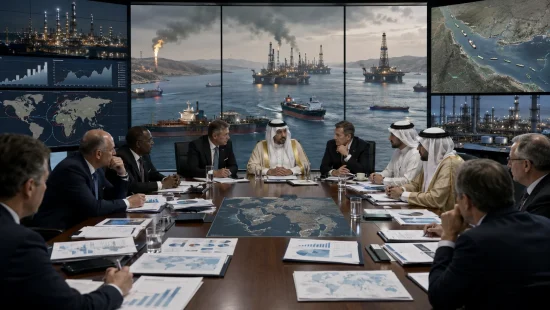
The OPEC+ July oil production increase comes at a difficult moment for global energy markets. The group has agreed to lift output targets for the fourth consecutive month, even as several member countries remain unable to supply customers fully because of disrupted export routes.
According to the details provided, seven core OPEC+ members decided to increase production targets by 188,000 barrels per day from July. This follows earlier target increases from April to June, which together added almost 600,000 barrels per day to the group’s planned output.
The decision appears to be part of a broader strategy to gradually unwind previous production cuts agreed in 2023. However, the difference between target output and real supply has become more important than the headline increase itself.
The Fourth Monthly Output Target Rise
The July decision follows increases in April, May and June. The pace of the increase has shifted, with the July rise matching June’s 188,000 barrels per day. Earlier monthly increases were higher, at 206,000 barrels per day, before being adjusted after the UAE exit.
| Month | Output Target Increase | Market Context |
| April | 206,000 bpd | Start of gradual cut unwinding |
| May | 206,000 bpd | UAE exit required policy adjustment |
| June | 188,000 bpd | Lower monthly rise after recalculation |
| July | 188,000 bpd | Supply crisis still affecting actual exports |
This pattern suggests OPEC+ is trying to maintain policy continuity. Yet the oil market is not responding only to official targets. Traders are also watching whether barrels can physically reach buyers.
The Role of Core OPEC+ Members
The seven members involved in the latest decision are Saudi Arabia, Iraq, Kuwait, Algeria, Kazakhstan, Russia and Oman. These countries have been central to the group’s recent production policy decisions.
Although OPEC+ includes 21 members, only a smaller group has played a direct role in recent output adjustments. The UAE was previously part of this core decision-making structure before leaving OPEC.
The OPEC+ July oil production increase therefore reflects both a production policy shift and a political adjustment inside the wider alliance.
How Is the Strait of Hormuz Crisis Affecting Global Oil Supply?
The Strait of Hormuz is one of the world’s most important oil transit routes. When oil flows through the strait are disrupted, global supply confidence can weaken quickly.
In the current crisis described, the war involving the United States and Iran has cut oil flows through the Strait of Hormuz. This has created a major supply shock, leaving key OPEC+ members, including Saudi Arabia, unable to supply customers in full since the end of February.
The result is a sharp gap between what OPEC+ says it wants to produce and what the market is actually receiving.
Reduced Gulf Exports
The Gulf region is central to global crude oil exports. If Gulf producers face export restrictions, lower shipping capacity or route closures, production targets become less meaningful.
A planned increase does not immediately help the market when barrels cannot move efficiently from producers to buyers. This is why the OPEC+ July oil production increase may have a limited short-term effect while the Strait of Hormuz remains disrupted.
Pressure on Key Oil Buyers
Large oil-importing economies depend on steady crude supply to support transport, manufacturing, heating, aviation and petrochemicals. When supply routes become unstable, buyers may need to compete for available barrels.
That competition can increase costs and create volatility across:
- Crude oil futures
- Refinery margins
- Petrol and diesel prices
- Shipping and insurance costs
- Business energy planning
A senior energy market analyst described the situation clearly:
“I would not treat a production target increase as the same thing as a supply increase. In this market, the real question is not what OPEC+ agrees on paper, but how much crude can actually move through constrained export routes.”
That insight captures the central issue. The official increase matters, but physical supply remains the market’s biggest concern.
What Does the OPEC+ July Oil Production Increase Mean for Oil Markets?

The OPEC+ July oil production increase sends a mixed signal to oil markets. On one hand, it shows that the group is still committed to returning some supply after earlier cuts. On the other hand, it may do little to ease the immediate crisis if export disruption continues.
For traders, this creates two competing fears. The first is a shortage fear, where closed or restricted shipping routes keep supply tight. The second is a surplus fear, where markets suddenly receive more barrels if the Strait of Hormuz reopens and OPEC+ continues increasing targets.
| Market Factor | Short-Term Effect | Possible Longer-Term Effect |
| July output target increase | May ease sentiment slightly | Could add supply if routes reopen |
| Strait of Hormuz disruption | Keeps shortage fears high | Could reverse quickly if resolved |
| Higher Brent crude prices | Raises fuel cost pressure | May encourage demand weakness |
| OPEC+ cut unwinding | Signals more supply ahead | Could create surplus concerns |
The group’s decision may therefore be more influential as a forward-looking signal than as an immediate physical supply solution.
Why Is Actual OPEC+ Production Still Falling Despite Higher Output Targets?
Actual OPEC+ production has fallen sharply despite higher output targets. The figures provided show production averaging 33.19 million barrels per day in April, down from 42.77 million barrels per day in February.
That is a major decline. It shows how quickly geopolitical disruption can overwhelm production policy.
Production Targets Versus Real Supply
A production target is not the same as actual production. OPEC+ can agree to raise quotas, but members must still have the capacity, export access and logistical stability to deliver those barrels.
| Measure | February | April | Change |
| OPEC+ production | 42.77 million bpd | 33.19 million bpd | -9.58 million bpd |
This gap explains why the OPEC+ July oil production increase has not automatically reassured the market. A target increase can look positive, but buyers need real cargoes.
Export Disruptions Across Gulf Producers
The supply crisis has particularly affected Gulf producers. Even countries with strong spare capacity can struggle to deliver crude if export routes are affected.
In normal market conditions, Saudi Arabia and other major producers can help stabilise supply. In the current situation, their ability to respond is limited by the movement of oil through critical routes.
This is why the market is watching shipping, security and diplomacy as closely as OPEC+ production statements.
How Has the UAE Exit Changed OPEC+ Production Policy?
The UAE’s departure from OPEC after almost 60 years has added another layer of uncertainty. Its exit has affected how production increases are calculated and distributed among the remaining members.
Before leaving, the UAE was part of the group involved in recent output policy decisions. Its departure meant that monthly production increases had to be adjusted. This is why the planned increases moved from 206,000 barrels per day in April and May to 188,000 barrels per day in June and July.
The UAE’s exit matters because it changes both the politics and arithmetic of OPEC+ output management.
| Policy Issue | Before UAE Exit | After UAE Exit |
| Core output decision group | Seven members plus UAE | Seven members |
| Monthly increase calculation | Included UAE share | Adjusted downward |
| OPEC internal balance | UAE remained within OPEC | OPEC lost a long-term member |
| Market perception | Broader Gulf coordination | Greater uncertainty around unity |
The OPEC+ July oil production increase therefore also reflects the alliance’s need to adapt after a major membership change.
What Impact Could the July Output Hike Have on Brent Crude and WTI Prices?
Oil prices remain highly sensitive to both production decisions and geopolitical developments. The supplied figures show Brent crude futures settling at $93.09 a barrel, down $1.94 or 2.04%. U.S. West Texas Intermediate finished at $90.54 a barrel, down $2.50 or 2.69%.
Prices had been near $72 before the war began, showing the scale of the risk premium now built into the market.
Brent Crude Price Movement
Brent crude is especially relevant to the UK because it is the main global benchmark for oil pricing. Higher Brent prices can influence petrol, diesel, aviation fuel and business energy costs.
| Oil Benchmark | Latest Settlement Provided | Daily Move | Percentage Move |
| Brent crude | $93.09 per barrel | -$1.94 | -2.04% |
| WTI crude | $90.54 per barrel | -$2.50 | -2.69% |
The price fall suggests traders saw some reduction in immediate conflict risk. However, prices remain much higher than pre-war levels.
West Texas Intermediate Market Reaction
WTI also fell, but the broader picture remains uncertain. If the market believes that supply disruption will continue, prices may remain elevated. If the Strait of Hormuz reopens and OPEC+ supply returns faster than expected, prices could move lower.
A former OPEC adviser summarised the market risk in plain terms:
“I see two markets inside one market. Today, traders are pricing fear of shortage. But the moment shipping normalises, the same traders may start pricing fear of surplus.”
This type of professional insight shows why oil markets can reverse quickly. The OPEC+ July oil production increase may support supply expectations later, but immediate pricing still depends heavily on security conditions.
Is OPEC+ Close to Fully Unwinding Its 2023 Oil Output Cut?

OPEC+ appears to be close to unwinding a large part of its 2023 production cut. The seven countries are increasing production as part of the gradual reversal of a 1.65 million barrels per day cut.
From July, the seven members have around 567,000 barrels per day of the original cut left to return to the market, after accounting for the UAE exit from May 1.
If OPEC+ continues monthly increases of about 188,000 barrels per day in August and September, the remaining cut could be unwound by the end of September.
This matters because it could change the balance of the market later in the year. If supply routes reopen at the same time that OPEC+ restores output, prices could face downward pressure.
Which OPEC+ Members Are Driving the Latest Oil Production Increase?
The latest OPEC+ July oil production increase is driven by seven members: Saudi Arabia, Iraq, Kuwait, Algeria, Kazakhstan, Russia and Oman.
These countries are important because they represent a core policy group within the broader OPEC+ structure. Their decisions influence market expectations, even when the full 21-member alliance does not make major changes.
The wider OPEC+ meeting also made no change to group-wide output policy running until the end of 2026. That suggests the July decision is focused on the specific unwinding path rather than a complete redesign of the alliance’s production framework.
The countries driving the decision have different interests. Some may want to restore revenue through higher output, while others may be more focused on price stability. The challenge is to balance national needs with wider market confidence.
What Could Happen When the Strait of Hormuz Reopens?
A reopening of the Strait of Hormuz could quickly change oil market sentiment. While the route remains disrupted, traders may focus on shortage risk. Once it reopens, attention could shift towards how much delayed or additional supply reaches the market.
This could create a fast move from fear of shortage to fear of surplus. The OPEC+ July oil production increase would become more important in that scenario because higher targets could translate into real barrels.
Possible market outcomes include:
- Crude prices falling if supply flows recover quickly
- Refinery buyers securing more stable cargoes
- Freight and insurance costs easing
- OPEC+ facing pressure to slow future increases
- Energy-importing countries seeing lower inflation pressure
However, the timing matters. A sudden return of flows could soften prices. A slow or partial reopening may keep the market tight for longer.
What Is the Long-Term Outlook for OPEC+ Production Quotas?

The long-term outlook for OPEC+ production quotas depends on capacity reviews, geopolitical stability and internal unity.
OPEC+ is conducting a review of member oil production capacity. This assessment is expected to help set reference points for 2027 production baselines. These baselines are important because they influence future quotas.
If some members believe their capacity is underestimated, they may push for higher baselines. If others are struggling to meet current quotas, the group may face pressure to rethink how targets are allocated.
The UAE’s exit also raises questions about long-term cohesion. A production alliance depends on trust, shared interests and credible enforcement. Any sign of internal disagreement can affect market confidence.
The OPEC+ July oil production increase is therefore not just about July. It is part of a longer negotiation over market share, production rights and future supply power.
Conclusion
The OPEC+ July oil production increase may help signal that the group is willing to return supply to the market, but it cannot fully stabilise global oil markets while export disruption remains severe.
The central issue is the gap between production targets and actual oil flows. OPEC+ has approved a 188,000 barrels per day increase for July, yet real production has fallen sharply because several members cannot export normally.
The July increase could become more important if the Strait of Hormuz reopens and producers can deliver more barrels. Until then, the oil market is likely to remain caught between two risks: shortage today and possible surplus later.
FAQs
Why did OPEC+ increase oil production targets for July?
OPEC+ increased July production targets as part of its gradual unwinding of earlier output cuts agreed in 2023. The latest increase adds 188,000 barrels per day to output targets, although actual supply remains limited by export disruption.
What is the Strait of Hormuz and why does it matter for oil supply?
The Strait of Hormuz is a critical oil shipping route used by major Gulf producers. When flows through the strait are reduced, global crude supply can tighten quickly, raising concerns about shortages and price volatility.
Will the OPEC+ July oil production increase lower crude oil prices?
The increase could help ease prices if it leads to more real supply. However, while export routes remain disrupted, the market may not see enough additional barrels to create a major price fall.
Why are OPEC+ output targets different from actual production?
Output targets are policy limits or goals set by the group. Actual production depends on capacity, infrastructure, export routes, sanctions, security conditions and member compliance.
How does the UAE leaving OPEC affect production decisions?
The UAE’s exit changes how OPEC+ calculates production increases among remaining members. It also affects the political balance within the alliance, especially because the UAE had been part of the core group involved in output policy.
Which countries are involved in the latest OPEC+ output increase?
The seven countries involved are Saudi Arabia, Iraq, Kuwait, Algeria, Kazakhstan, Russia and Oman. These members have been central to recent OPEC+ production decisions.
What happens if OPEC+ fully unwinds its 2023 production cut?
If OPEC+ fully unwinds the cut, more supply could return to the market. This may reduce prices if demand is stable and export routes are open, but it could also create surplus concerns if supply rises too quickly.
Why are oil prices still high despite the production increase?
Oil prices remain high because traders are focused on supply disruption, geopolitical risk and reduced exports. A target increase alone does not guarantee immediate physical supply.