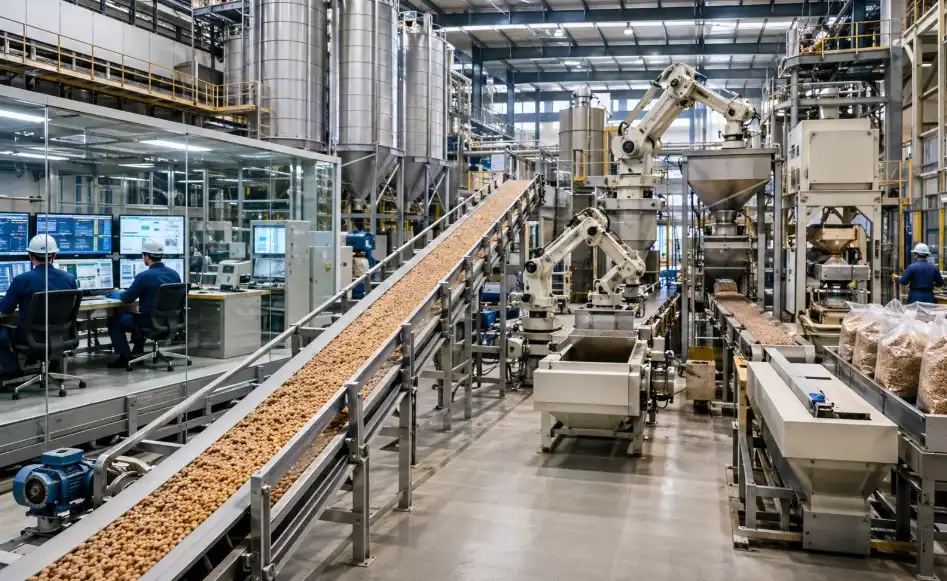
Across many industries, companies are continuously optimizing their processes to remain competitive and future-proof. The animal feed industry is no exception. With increasing pressure to ensure consistent quality, traceability, efficiency, and compliance with strict regulations, automation has become more of a necessity than a luxury.
By implementing advanced process automation systems, feed producers can significantly improve operational performance while maintaining high standards of product safety and quality.
Below, we explore how automation is shaping the animal feed industry, how companies can successfully implement automation systems, and what challenges and innovations come with this transition.
How Does Automation in the Animal Feed Industry Improve Production Efficiency and Quality?
The Role of Automation in the Animal Feed Industry
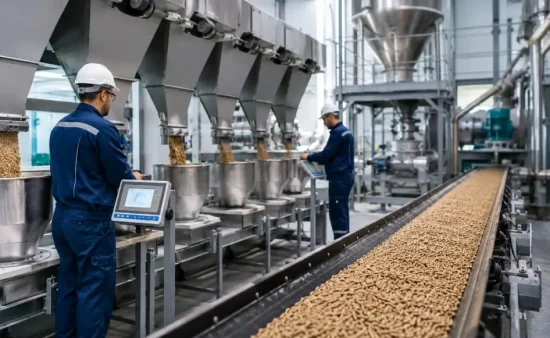
Automation plays a critical role in modern feed production facilities. Precision is essential when producing animal feed, as even small formulation errors can impact nutritional value and animal health. Automated systems reduce the risk of human error during ingredient dosing, mixing, batching, and packaging processes.
By integrating automation into production lines, manufacturers can increase production speed without sacrificing accuracy. Automated weighing systems, controlled mixing processes, and real-time monitoring tools ensure that formulations remain consistent across batches. This level of control improves product quality and strengthens customer trust.
In addition, automation enhances traceability. With digital monitoring systems, companies can track raw materials, production parameters, and finished products more efficiently.
This is particularly important in an industry where food safety standards and regulatory compliance are strict. Automated quality control systems allow producers to quickly detect deviations and respond proactively in the animal feed industry.
Successful Implementation of Process Automation Systems
Implementing an automation system requires careful planning. Companies must first assess their existing processes to identify inefficiencies and determine where automation will deliver the greatest return on investment. A clear roadmap helps avoid unnecessary disruptions during the transition.
Employee involvement is equally important. Automation often changes job roles rather than eliminating them. Operators may shift from manual production tasks to supervising systems, analyzing data, and managing performance dashboards. Providing training and upskilling opportunities ensures that employees can adapt confidently to new technologies.
Another key factor is system compatibility. Automation solutions should integrate seamlessly with existing equipment and enterprise systems, such as ERP or inventory management software. Choosing scalable process automation systems allows businesses to expand functionality as production demands grow.
Technological Developments and Innovations
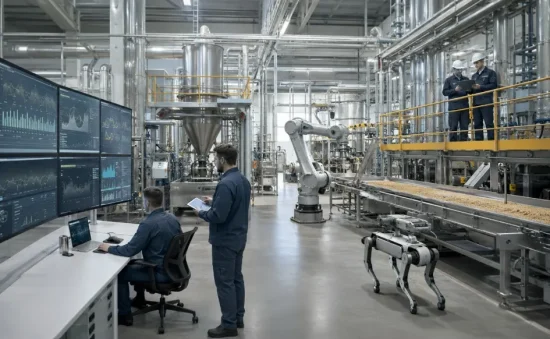
Technological advancements continue to transform industrial automation. The integration of the Internet of Things (IoT) enables machines and sensors to communicate in real time, providing valuable production data. Artificial intelligence (AI) is increasingly used for predictive maintenance, helping companies prevent equipment failures before they occur.
Data analytics also plays a growing role in process optimization. By analyzing production metrics, energy consumption, and performance trends, companies can make data-driven decisions that reduce waste and improve efficiency.
Challenges of Automation Implementation
Despite its many benefits, automation also presents challenges. Initial investment costs can be substantial, and the complexity of modern systems requires careful management. Resistance to change within teams may also slow adoption if communication and training are insufficient.
However, companies that approach automation strategically: by planning thoroughly, investing in employee development, and selecting the right technology partners, can successfully overcome these challenges.
In the long term, automation strengthens competitiveness, improves product consistency, and positions animal feed manufacturers for sustainable growth in an increasingly demanding market.