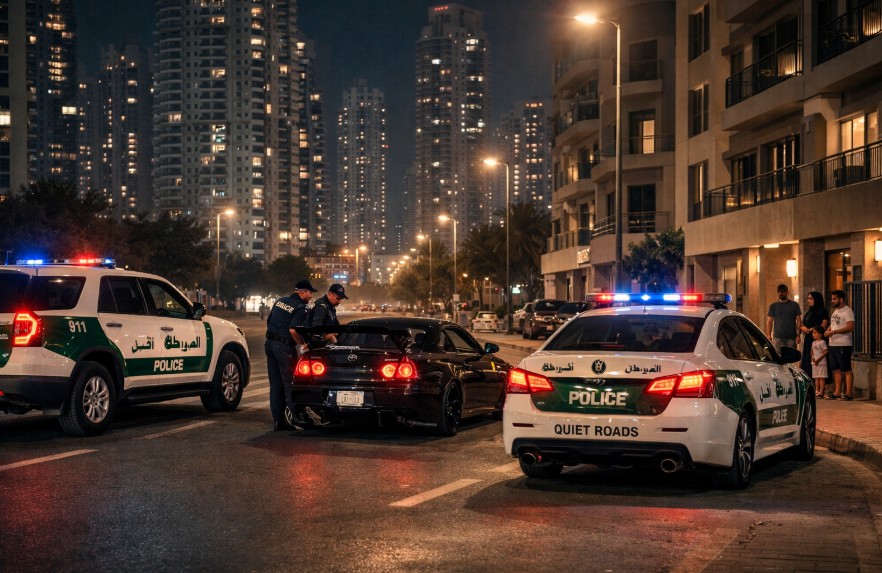
The Dubai Police “Quiet Roads” initiative was launched because too many drivers were creating noise, danger, and disruption in residential areas across Dubai. In response, Dubai Police issued 33,372 fines and seized 1,230 vehicles linked to illegal modifications, reckless driving, loud exhausts, and misuse of horns or sound systems. The campaign is designed to make neighborhoods quieter, safer, and more comfortable for residents.
Key takeaways:
- 33,372 traffic fines and 1,230 vehicle seizures were recorded
- Illegal engine and chassis modifications were among the most common violations
- Loud exhausts, horn misuse, and reckless driving are key targets
- Motorcycles, electric bikes, and bicycles accounted for thousands of additional offences
- Dubai Police are using complaints and traffic data to identify hotspots
- The initiative aims to improve residents’ “sense of safety” in residential communities
Why Did Dubai Police Launch the ‘Quiet Roads’ Campaign?
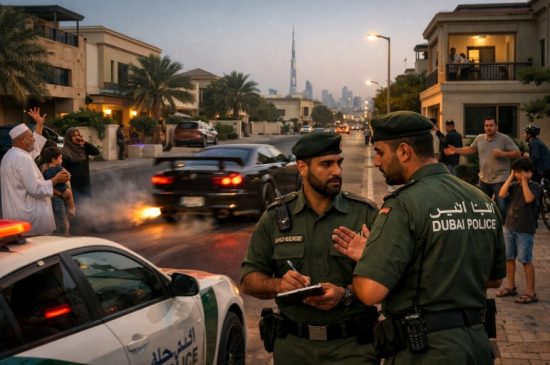
Dubai Police launched the “Quiet Roads” campaign because repeated complaints from residents showed that dangerous and noisy driving was becoming a serious issue in many neighborhoods across Dubai.
Authorities found that loud modified vehicles, aggressive driving, speeding, and misuse of horns were affecting daily life, especially in residential streets where families, children, and elderly residents live.
The campaign was created to achieve three goals:
- Reduce noise pollution in residential areas
- Improve road safety and prevent accidents
- Increase residents’ comfort and sense of security
Brigadier Jumaa Salem bin Suwaidan explained why the campaign became necessary. He said, “The campaign was launched in response to recurring negative traffic behaviours observed in certain residential neighbourhoods, including excessive noise, reckless driving, and illegal vehicle modifications.” He added that these behaviours directly affect residents’ comfort and wellbeing.
Instead of relying only on random patrols, Dubai Police decided to use a data-led approach. Officers studied community complaints, previous traffic reports, and locations where repeated violations were happening. This allowed the campaign to focus on the areas where residents were most affected.
How Many Fines and Vehicle Seizures Have Been Issued Under the Initiative?
The “Quiet Roads” initiative has already produced one of the largest traffic crackdowns seen in Dubai residential areas. According to Dubai Police, officers issued 33,372 traffic fines and seized 1,230 vehicles during the campaign.
These numbers show that the authorities are not only warning drivers but also taking direct action against repeat offenders and vehicles that create risk or disturbance.
What Do the 33,372 Fines and 1,230 Seized Vehicles Reveal?
The figures reveal that disruptive driving is far more common than many residents may realize. More than 33,000 offences were recorded, meaning that thousands of drivers across the city were caught violating traffic rules linked to safety and public peace.
The seizure of 1,230 vehicles is especially important because Dubai Police only impound vehicles in more serious cases. In most situations, these were vehicles linked to illegal modifications, extreme noise, or repeated reckless driving.
These numbers also suggest that the campaign is working in two ways:
- Punishing drivers who continue to ignore traffic rules
- Sending a strong message that disruptive driving will no longer be tolerated
Brigadier Jumaa Salem bin Suwaidan described the initiative as part of a broader effort to improve quality of life and strengthen community safety. He said the operation is designed to create “lasting behavioural impact” rather than only short-term enforcement.
For example, a driver who repeatedly races through a residential area with a modified exhaust may now face not only a fine, but also vehicle seizure. That creates a stronger deterrent for future violations.
Which Violations Were Recorded Most Often?
The most common violations were not limited to loud cars. Dubai Police identified several different types of offences during the campaign, with illegal modifications and road noise among the biggest concerns.
The breakdown included:
- 1,178 cases of unauthorized engine or chassis modifications
- 412 violations related to noise disturbance
- 341 reckless driving offences that endangered lives and property
- 230 cases involving misuse of horns or sound systems
The largest number of offences, however, came from motorcycles, electric bikes, and bicycles:
- 17,117 motorcycle-related violations
- 14,094 violations involving electric bikes and bicycles
These figures show that the issue extends beyond cars. Many residents have complained about motorcycles revving loudly late at night, modified scooters being used recklessly, and e-bikes being driven dangerously in neighborhood streets.
One resident living near a busy residential road in Dubai Marina described the situation by saying, “Every night after 10 p.m., you could hear motorcycles and modified cars racing past. It was difficult to sleep, and families stopped letting children play outside in the evening.” The resident added that the increased police presence has already made the area noticeably quieter.
What Traffic Violations Are Dubai Drivers Being Penalized For?
Under the “Quiet Roads” initiative, Dubai Police are penalizing drivers for any behavior that creates danger, excessive noise, or disturbance in residential areas. The campaign focuses on actions that affect both road safety and the daily lives of people living nearby.
The most common offences include:
- Illegal engine or chassis modifications
- Driving with excessively loud exhaust systems
- Reckless driving or dangerous speeding
- Drifting, sudden acceleration, and racing in residential streets
- Misusing vehicle horns
- Playing music at extremely high volume from cars
- Dangerous use of motorcycles, e-bikes, and bicycles
Drivers are also being penalized when they repeatedly commit offences in the same neighborhood or ignore previous warnings. In some cases, the violation may seem minor at first, such as revving a vehicle engine late at night or repeatedly sounding the horn. However, when these behaviors disturb residents or create safety risks, Dubai Police can issue fines or seize the vehicle.
A particularly important focus is on offences that put other people in danger. Reckless driving, illegal street racing, and modified vehicles with louder engines can increase the chance of accidents, especially in neighborhoods where pedestrians, families, and children are present.
Dubai Police have made it clear that the campaign is not only about traffic enforcement. It is also about preserving public peace and improving daily life in residential communities.
Why Are Illegal Vehicle Modifications a Major Focus of the Initiative?
Illegal vehicle modifications are one of the main targets of the “Quiet Roads” campaign because they are often directly linked to excessive noise, unsafe driving, and repeated traffic violations. During the operation, Dubai Police recorded 1,178 cases involving unauthorized changes to a vehicle’s engine or chassis. That made it one of the most common offences in the entire campaign.
Many of these modifications are designed to make vehicles louder, faster, or visually different. While some drivers see this as a hobby or personal style, Dubai Police consider these changes dangerous when they affect public safety or disturb residential areas.
What Counts as an Unauthorized Engine or Chassis Modification?
Unauthorized modifications include any change made to the vehicle that has not been approved under UAE traffic regulations. In many cases, these changes alter how the vehicle sounds, moves, or performs.
Examples of illegal modifications can include:
- Removing or changing the exhaust system to create louder noise
- Modifying the engine to increase speed or power
- Lowering or raising the chassis beyond approved limits
- Installing oversized tires or altered suspension systems
- Changing the car in a way that affects road safety or stability
Drivers sometimes believe that cosmetic changes are acceptable, but once a modification changes the sound level, speed, or handling of the vehicle, it may become illegal.
Brigadier Jumaa Salem bin Suwaidan highlighted the seriousness of the issue by saying that unauthorized modifications are one of the main reasons the campaign was launched. He explained that many complaints from residents involved modified cars driving through neighborhoods late at night.
How Can Modified Cars Create Noise and Safety Risks?
Modified vehicles often create much more than just extra noise. A louder exhaust or more powerful engine can encourage dangerous behavior, including speeding, sudden acceleration, and street racing.
These vehicles may create risks such as:
- Higher chances of losing control at high speed
- Increased braking distance and reduced vehicle stability
- Louder engine sounds that disturb nearby residents
- Greater risk to pedestrians and cyclists in residential areas
For example, if a driver installs an illegal exhaust system and modified engine tuning, the car may produce noise levels far above what is acceptable in a residential neighborhood. Some reports indicate that Dubai Police use sound-monitoring equipment to identify vehicles that exceed acceptable noise limits. In severe cases, drivers can face fines, black points, and impoundment of the vehicle.
A vehicle expert interviewed by local media described the issue this way: “Many drivers believe a louder car is only a personal choice. In reality, modified exhausts often go hand in hand with unsafe speeds and risky behavior. That is why enforcement is becoming stricter.”
The campaign is therefore focused not only on how a vehicle looks or sounds, but on whether those modifications make the roads less safe for everyone.
How Is Reckless Driving Affecting Residential Communities in Dubai?
Reckless driving has become one of the biggest concerns in residential neighborhoods across Dubai because it affects both safety and daily quality of life. Dubai Police recorded 341 cases of dangerous driving that put lives and property at risk during the “Quiet Roads” initiative.
In many communities, residents reported drivers speeding through narrow streets, racing at night, drifting near roundabouts, or revving engines close to homes. These actions can create fear for families and make residents feel unsafe, even when no accident occurs.
Common examples of reckless driving in residential areas include:
- Driving well above the speed limit
- Racing or accelerating aggressively at night
- Ignoring pedestrian crossings
- Dangerous use of motorcycles and e-bikes
- Performing stunts or drifting in open areas
One of the biggest problems is that residential streets are not designed for this type of behavior. Children may be walking home, families may be crossing roads, and cyclists may be sharing the street.
Brigadier Jumaa Salem bin Suwaidan said, “This approach allows us to carry out targeted field operations that deliver measurable results and create lasting behavioural change.” His statement reflects Dubai Police’s view that the goal is not only to issue fines, but to reduce dangerous driving before someone is injured.
Why Are Loud Exhausts, Horns, and Sound Systems Being Targeted?
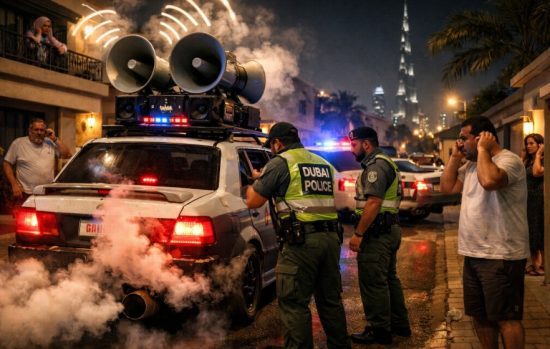
Loud exhausts, unnecessary horn use, and powerful sound systems are being targeted because they are among the most common sources of complaints from residents. Dubai Police found that excessive vehicle noise was reducing the quality of life in many neighborhoods, especially during the evening and night. The campaign recorded 412 noise-related offences and 230 cases involving misuse of horns or audio systems.
Many residents reported that the problem was not limited to one type of vehicle. Modified cars, motorcycles, and even some delivery vehicles were creating repeated noise disturbance in residential areas.
When Does Vehicle Noise Become a Public Nuisance?
Vehicle noise becomes a public nuisance when it is loud enough to repeatedly disturb people living nearby. This usually happens when drivers intentionally rev engines, use modified exhaust systems, play music at very high volume, or sound the horn without a genuine reason.
Dubai Police consider the following actions to be public nuisance offences:
- Repeatedly revving a vehicle engine in residential streets
- Driving with an illegally modified exhaust
- Playing music loudly from a vehicle late at night
- Using the horn to attract attention instead of for safety
The issue is particularly serious in apartment communities and family neighborhoods, where even short periods of noise can affect sleep and comfort.
A resident from Jumeirah told local reporters, “The loudest problem was never traffic itself. It was the constant revving and horns after midnight. Since the campaign began, there has been a clear difference in how quiet the streets feel.”
What Are the Penalties for Misusing Horns and Audio Systems?
Drivers who misuse horns or sound systems can face fines, black points, and in more serious cases, seizure of the vehicle. During the “Quiet Roads” campaign, 230 violations were recorded specifically for public nuisance caused by horns and audio systems.
The most common examples include:
- Repeated use of the horn in traffic without a safety reason
- Playing music at an excessively loud volume
- Installing amplified sound systems designed to be heard outside the vehicle
- Continuing the behavior after previous warnings
Dubai Police have made it clear that even if a driver believes the behavior is harmless, it can still become a legal issue when it disturbs other people. In some cases, a vehicle may be stopped immediately if officers determine that the noise is excessive or intentionally disruptive.
The campaign is intended to change habits as well as enforce the law. By focusing on everyday behaviors such as loud music or unnecessary horn use, Dubai Police hope to reduce the stress and discomfort that many residents experience in busy neighborhoods.
Why Are Motorcycles, Electric Bikes, and Bicycles Included in the Crackdown?
Motorcycles, electric bikes, and bicycles are included in the “Quiet Roads” crackdown because they accounted for the largest number of violations during the campaign. Dubai Police recorded 17,117 motorcycle-related offences and 14,094 offences involving electric bikes and bicycles. These numbers show that smaller vehicles are also contributing to unsafe and disruptive behavior in residential areas.
Many of these violations involved speeding, dangerous riding, using unauthorized routes, ignoring traffic signals, or creating excessive noise. In some neighborhoods, residents have reported motorcycles racing through side streets or e-bikes being ridden recklessly on pedestrian paths.
| Vehicle Type | Recorded Violations | Common Issues |
| Motorcycles | 17,117 | Loud exhausts, speeding, racing, dangerous riding |
| Electric Bikes | 14,094 | Riding on sidewalks, ignoring traffic rules |
| Bicycles | Included in e-bike total | Unsafe riding in residential areas |
Dubai Police believe these vehicles require closer monitoring because they are often used in narrow streets and busy neighborhoods where families and pedestrians are present. Unlike larger vehicles, motorcycles and e-bikes can move quickly through residential areas and are sometimes more difficult to monitor.
The campaign therefore applies the same principle to all road users: if the behavior creates danger or disturbs the public, it can lead to fines or stronger action.
How Does Dubai Police Identify Hotspots and Repeat Violations?
Rather than enforcing the campaign equally across every part of the city, Dubai Police uses complaints, traffic data, and community reports to identify the areas where problems happen most often. This allows officers to focus resources on streets and neighborhoods where residents are repeatedly affected.
The process includes:
- Reviewing complaints submitted by residents
- Tracking where repeated traffic offences occur
- Studying patterns linked to certain times and locations
- Deploying patrols and monitoring equipment in hotspot areas
Brigadier Jumaa Salem bin Suwaidan explained how the system works. He said, “This allows for targeted field interventions designed to deliver measurable results and create a lasting behavioural impact.”
For example, if residents in one neighborhood repeatedly report loud motorcycles between 10 p.m. and midnight, Dubai Police may increase patrols in that location during those hours. Over time, the data helps officers identify repeat offenders and the roads where violations happen most often.
This targeted approach is one reason the campaign has been able to produce such a large number of fines and vehicle seizures in a relatively short period.
What Does the ‘Sense of Safety’ Indicator Mean for Residents?
The “sense of safety” indicator is the main way Dubai Police measures whether the “Quiet Roads” initiative is improving daily life for residents. Instead of focusing only on the number of fines issued, Dubai Police want to know whether people actually feel safer and more comfortable in their neighborhoods.
This indicator looks at issues such as:
- Whether residents hear less traffic noise
- Whether families feel safer walking outside
- Whether complaints about reckless driving decrease
- Whether neighborhoods feel calmer at night
The idea is important because traffic problems affect more than roads. They can affect sleep, stress levels, and the way people use public spaces.
Dubai Police say the initiative combines enforcement, monitoring, and public awareness. If residents begin reporting that their neighborhoods are quieter and safer, the campaign is considered successful even beyond the number of fines collected.
How Can You Avoid Fines and Vehicle Seizure Under the ‘Quiet Roads’ Initiative?
The easiest way to avoid fines under the “Quiet Roads” initiative is to make sure your vehicle and driving habits fully comply with UAE traffic laws. Dubai Police are paying special attention to behaviors that disturb residential areas, so even actions that may seem small can lead to penalties.
To avoid problems:
- Do not install unapproved exhaust, engine, or suspension modifications
- Avoid revving your engine in residential areas
- Use your horn only when necessary for safety
- Keep music and sound systems at a reasonable level
- Follow speed limits and avoid sudden acceleration
- Ensure motorcycles, e-bikes, and bicycles follow traffic rules
You should also check whether any existing modifications on your vehicle are legally approved. A car that was modified outside the UAE or purchased second-hand may still violate local regulations.
If you are unsure whether a modification is allowed, it is better to confirm with the relevant traffic authorities before driving. Dubai Police have shown that they are willing to seize vehicles in serious cases, especially when there are repeated complaints or a clear risk to public safety.
By driving responsibly and keeping your vehicle compliant, you can avoid both fines and the inconvenience of losing your vehicle.
What Should You Do If You Witness Dangerous or Noisy Driving in Your Neighborhood?
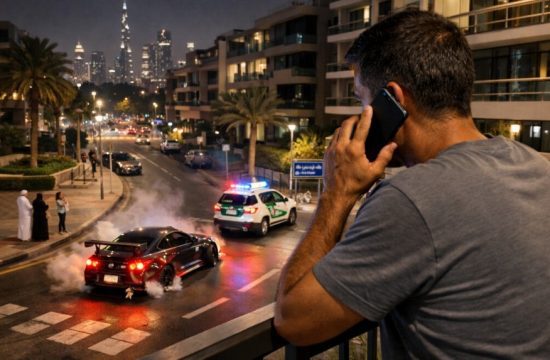
If you witness dangerous driving or repeated noise disturbance in your neighborhood, Dubai Police encourage you to report it through official channels. Residents play an important role in helping officers identify the locations and behaviors that need attention.
When possible, try to note:
- The location and time of the incident
- The type of vehicle involved
- The license plate number, if visible
- The behavior, such as speeding, loud noise, or dangerous driving
You do not need to confront the driver directly. In fact, it is safer to avoid any direct interaction and instead allow Dubai Police to handle the situation.
Brigadier Jumaa Salem bin Suwaidan urged residents to cooperate with the campaign and report negative traffic behavior. He said that community support is essential for protecting lives, property, and the quality of life across the emirate.
What Does the Future of the ‘Quiet Roads’ Initiative Mean for Drivers in Dubai?
The future of the “Quiet Roads” initiative suggests that traffic enforcement in Dubai will become more targeted, more data-driven, and more focused on residential quality of life. Dubai Police have already said they plan to continue specialized campaigns based on complaints, traffic data, and repeat violations.
For drivers, this means that:
- Illegal modifications are likely to face even stricter enforcement
- Repeat offenders may be monitored more closely
- Noise-related violations could lead to faster vehicle seizure
- Residential areas may see more patrols and monitoring systems
The campaign also sends a wider message that road safety is no longer only about preventing accidents. Dubai Police are treating excessive noise and dangerous driving as issues that directly affect community wellbeing.
Drivers who follow the rules are unlikely to face any problems. However, those who continue to ignore regulations may find that the penalties become much more serious in the months ahead.
FAQs
Can Dubai Police seize your car for a loud exhaust?
Yes, Dubai Police can seize a vehicle if the exhaust system has been illegally modified and creates excessive noise. Vehicle seizure is more likely if the driver repeatedly commits the offence or also drives recklessly.
Are first-time offenders fined under the Quiet Roads initiative?
Yes, first-time offenders can still receive a fine if they break traffic or noise regulations. However, repeat offences are more likely to result in stronger penalties such as black points or vehicle seizure.
Does the Quiet Roads initiative apply only to cars?
No, the campaign also applies to motorcycles, electric bikes, and bicycles. Dubai Police recorded thousands of violations involving these vehicles during the initiative.
Can you legally modify your car in Dubai?
Some vehicle modifications may be legal if they are approved and do not affect safety or noise levels. Changes to the engine, chassis, suspension, or exhaust usually require official approval under UAE traffic laws.
Why are residential areas the main focus of the campaign?
Residential neighborhoods are the main focus because noise and reckless driving have a direct effect on families, children, and elderly residents. The campaign is intended to make communities in Dubai feel quieter and safer.
How can you report noisy or dangerous driving in your area?
You can report the incident through official Dubai Police channels by sharing the location, time, and vehicle details. This helps officers identify repeat offenders and increase patrols in problem areas.
Will the Quiet Roads initiative continue in the future?
Yes, Dubai Police has confirmed that the initiative will continue with more targeted enforcement in the future. Authorities are expected to use traffic data and community complaints to expand the campaign further.