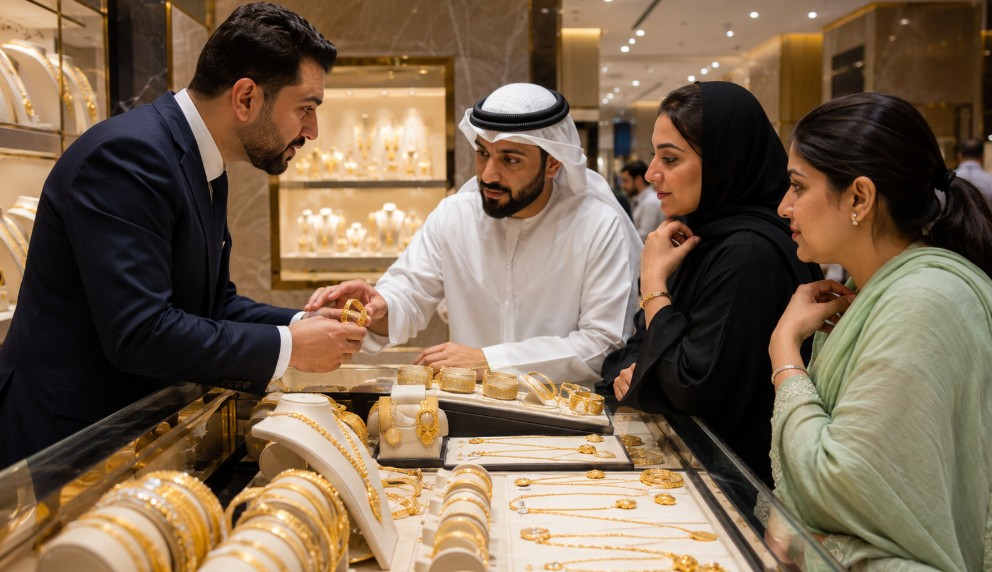
In many current market scenarios, jewellery purchased in Dubai can cost less than buying similar jewellery in India, especially for buyers comparing 22K and 24K gold, larger jewellery purchases, and wedding collections. The price difference is largely influenced by gold rates, import duties, taxes, making charges, and retail competition.
However, lower displayed prices do not automatically mean better value. Buyers should compare the complete invoice, including workmanship, purity standards, and any travel or customs considerations before making a decision.
Key takeaways:
- Dubai currently shows pricing advantages in many jewellery categories
- Import duty differences affect final jewellery costs
- Making charges can significantly change total pricing
- Wedding and family purchases may generate larger savings
- The final decision should be based on complete purchase value, not only gold rates
Why Are More UAE Buyers and Indian Shoppers Comparing Jewellery Costs Today?
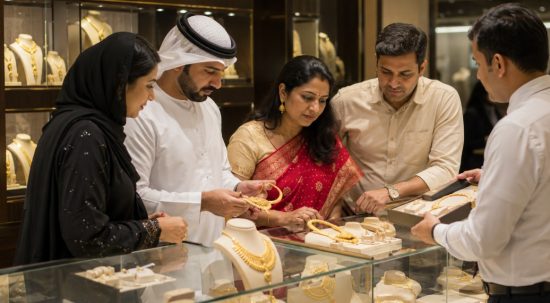
Jewellery buying has become more value-driven, with buyers increasingly comparing markets instead of relying only on convenience or tradition. The focus has shifted from where gold is available to where the overall jewellery purchase delivers better value.
Recent pricing changes have increased interest in comparing Dubai and India, driven by differences in import structures, retail pricing, and jewellery costs.
Tawhid Abdulla, Chairman of Dubai Jewellery Group, noted that the widening price gap could encourage more Indian tourists and consumers to choose the UAE for jewellery purchases.
Today, buyers commonly compare:
- Final jewellery invoice
- Gold purity
- Making charges
- Tax impact
- Purchase flexibility
This reflects a more informed and value-conscious approach to jewellery buying.
What Actually Makes Jewellery Prices Different Between Dubai and India?
A gold rate shown outside a jewellery store rarely represents the final amount buyers actually pay. Several pricing layers influence the final jewellery bill, which is why the same jewellery weight may cost differently across markets.
How Do Gold Rates Influence Final Jewellery Pricing?
Gold rate is the largest cost component of jewellery pricing.
Recent market comparisons showed approximately:
- Dubai 24K Gold: AED 565 per gram
- Dubai 22K Gold: AED 523.25 per gram
Compared with:
- India 24K Gold: ₹16,233 per gram (approximately AED 622)
- India 22K Gold: ₹14,880 per gram (approximately AED 570)
This creates an immediate pricing gap before additional charges are included.
However, jewellery pricing depends on more than metal value because final invoices may include:
- Jewellery design complexity
- Metal wastage calculations
- Production processes
- Brand positioning
Shamlal Ahamed explained that the current price advantage compared to India is not marginal, highlighting how noticeable pricing differences have become.
How Much Do Import Duties, Taxes, and Government Charges Change the Cost?
Government policies directly influence jewellery affordability. India’s increase in import duties created additional cost pressure across the jewellery sector, which contributed to a wider price gap between markets.
Taxes and government-linked costs may include:
- Import duty
- GST-related additions
- VAT components
- Regulatory charges
Even when international gold prices remain similar, these added layers may push retail prices higher. This is one reason many buyers compare complete purchase costs rather than focusing only on live gold prices.
Industry commentary suggests that buyers increasingly calculate total ownership cost rather than purchase-day pricing.
Why Do Making Charges and Retail Margins Matter More Than Buyers Expect?
Making charges are often underestimated. Two jewellery pieces with identical gold weight may have different final prices depending on craftsmanship and labour.
Factors affecting final bills include:
- Handcrafted work
- Stone settings
- Design difficulty
- Retail margins
- Manufacturing processes
Dubai retailers frequently promote competitive pricing charges because of scale advantages and broader sourcing networks. Shamlal Ahamed also noted that GCC markets offer some of the lowest making charges globally.
For heavier jewellery purchases, making charges sometimes create larger savings than differences in gold prices themselves.
Is Gold Jewellery Really Cheaper in Dubai Than India in 2026?
For many buyers in 2026, Dubai continues to show stronger pricing competitiveness than India. However, the answer depends on purchase purpose and complete ownership cost.
Current pricing comparisons indicate visible differences across 22K and 24K categories.
| Comparison | Dubai | India |
| 24K Gold | AED 565/g | ₹16,233/g |
| 22K Gold | AED 523.25/g | ₹14,880/g |
| Import Impact | Lower | Higher |
| Making Charges | Often competitive | Variable |
| Large Purchases | Strong value potential | Depends |
Industry estimates suggest that pricing differences may approach approximately 10–12% in selected buying scenarios.
However, buyers should remember that final jewellery value depends on:
- Purchase quantity
- Design complexity
- Taxes
- Travel plans
- Total invoice cost
Dubai may appear cheaper at first glance, but smart comparisons require evaluating the complete transaction.
How Much Can Buyers Save When Purchasing Jewellery in Dubai Instead of India?

The amount buyers save depends on what they purchase, how much they buy, and which costs are included in the comparison. Looking only at the displayed gold rate often creates an incomplete picture. The stronger comparison is always between the final payable amount.
For many buyers, savings become more visible in larger purchases because small price differences per gram multiply across total jewellery weight.
Shamlal Ahamed commented that there has never been a better time to purchase gold and jewellery in the UAE for smart NRIs, tourists, and investors. That statement reflects broader market confidence around value rather than guaranteed savings.
What Does a Small Jewellery Purchase Comparison Look Like?
Smaller purchases usually show moderate savings rather than dramatic differences.
Example scenario:
A buyer purchases a 25g 22K jewellery item.
Estimated comparison factors:
| Cost Element | Dubai | India |
| Gold Rate | Lower | Higher |
| Making Charges | Often lower | Variable |
| Tax Impact | Competitive | Higher |
| Final Invoice | Often lower | May be higher |
Smaller purchases may benefit from:
- Competitive metal pricing
- Promotional making charges
- Retail competition
At the same time, premium collections and luxury branding can reduce the overall difference.
What Happens When Buying Wedding or Family Jewellery Sets?
This is where price differences often become more meaningful.
Wedding purchases usually involve:
- Multiple jewellery pieces
- Higher gold weight
- Coordinated design sets
- Additional craftsmanship
A purchase involving 150g–250g of jewellery can produce larger overall value differences compared with buying single pieces.
Industry commentary highlighted that revised traveller allowances and market conditions may encourage more jewellery purchasing activity among families and NRIs.
Large jewellery orders also benefit from:
- Better negotiation opportunities
- Reduced effective making costs
- Consolidated billing
For many wedding buyers, total making charges become more important than daily gold movements.
When Do Travel and Carrying Costs Reduce the Savings?
Savings are not automatic. Some buyers lose price advantages because they calculate only purchase cost and ignore ownership cost.
Additional expenses may include:
- Travel allocation
- Currency conversion
- Customs obligations
- Insurance costs
- Documentation expenses
For example, a buyer saving 8–10% on jewellery could reduce that benefit if the purchase requires additional travel spending. Tawhid Abdulla stated that the UAE’s strength extends beyond pricing and includes product variety, craftsmanship, transparency, and consumer confidence.
The strongest savings usually occur when jewellery purchases are combined with existing travel plans rather than planned as a standalone trip.
Which Hidden Costs Should Buyers Calculate Before Making a Decision?

Comparing jewellery only by gram price creates incomplete results. The final bill often includes several additional costs that buyers may overlook. Before deciding between Dubai and India, buyers should calculate the complete ownership cost.
Important cost areas include:
- Making charges
- VAT and applicable taxes
- Currency conversion differences
- Certification costs
- Insurance considerations
- Customs requirements
- Exchange and resale conditions
Another important factor is jewellery style. Simple jewellery designs may maintain stronger price advantages, while heavy handcrafted collections can increase labour-related costs.
Buyers should request:
- Detailed invoices
- Purity confirmation
- Charge breakdowns
- Buy-back information
The strongest buying decisions come from comparing total value rather than comparing only the live gold rate. A lower gold price does not automatically guarantee a lower overall jewellery expense.
Does Buying Jewellery in Dubai Still Save Money After Bringing It to India?
For many buyers, Dubai can still offer savings after bringing jewellery to India, but only when the purchase is planned carefully and evaluated beyond the initial price. The final value depends on factors such as purchase quantity, jewellery category, customs treatment, documentation, and overall travel expenses.
Many buyers assume jewellery purchased in Dubai will always remain cheaper after returning to India, but this is not always the case. Savings may reduce if declarations become necessary, duties apply, travel costs rise, or exchange rates affect the final amount.
For travellers already visiting Dubai for business, holidays, or family reasons, purchasing jewellery during the trip may deliver better value than travelling solely for shopping.
Buyers who usually gain the most compare invoices in advance, keep proper records, understand travel requirements, and calculate total ownership cost rather than focusing only on the purchase price.
Dubai’s pricing advantage remains meaningful in many cases, but final savings should always be measured after considering all associated costs.
How Do Purity Standards and Jewellery Quality Compare Between Dubai and India?
Price comparisons matter, but purity and quality remain equally important. Dubai has developed a reputation for transparent retail practices and strong consumer confidence in gold purity. Buyers often appreciate the availability of detailed billing and international jewellery standards.
India also maintains established jewellery quality systems, particularly through recognised purity verification processes and strong domestic jewellery traditions.
Buyers should compare:
- Purity certification
- Hallmark information
- Invoice transparency
- Buy-back policies
- Design quality
Industry representatives have repeatedly highlighted the UAE’s transparent regulations and consumer confidence as part of the overall value proposition.
In practice, both markets can provide excellent quality jewellery. The bigger difference is usually not quality itself—it is how pricing structures, making charges, and final ownership costs influence the buyer experience.
Who Benefits Most From Buying Jewellery in Dubai?

Dubai’s pricing advantage creates more value for certain buyer groups than others. The strongest beneficiaries are typically buyers purchasing with a clear objective rather than occasional shoppers.
Groups that may benefit include:
- UAE residents purchasing locally
- Indian tourists already travelling
- NRI families planning seasonal buying
- Wedding buyers purchasing larger quantities
- Buyers focused on long-term metal value
Example scenario:
A family visiting Dubai for summer travel decides to purchase wedding jewellery locally instead of waiting to buy later. Since travel costs already exist, the overall savings opportunity becomes stronger.
Anil Dhanak stated that Dubai already has a strong reputation for competitive pricing, purity, and design variety. Buyers focused on both value and jewellery selection often find Dubai attractive. However, the best decision still depends on purchase size, design preferences, and total invoice comparison.
What Are the Biggest Misconceptions About Dubai Jewellery Prices?
Dubai jewellery pricing is often discussed using broad assumptions, but actual buying outcomes are more detailed than simple price comparisons.
One of the biggest misconceptions is that Dubai jewellery is always cheaper regardless of purchase type. While Dubai currently shows price advantages in many scenarios, factors such as design complexity, making charges, taxes, and customs can change the final outcome.
Another common misunderstanding is that lower prices mean lower purity or quality. In reality, established UAE jewellery retailers operate with recognised purity practices and transparent billing methods.
Some buyers also assume that all travellers automatically save money by purchasing abroad. Savings vary depending on quantity, travel purpose, and final invoice calculations.
There is also confusion between facts and expectations.
- Confirmed fact: Dubai currently offers competitive pricing in many jewellery categories.
- Market expectation: Price advantages may continue if conditions remain similar.
- Misconception: Every buyer will automatically save the same percentage.
The best approach is to compare total purchase value rather than relying on assumptions.
Where Should Buyers Purchase Jewellery Based on Their Goals?
The answer depends on what buyers value most. If the objective is reducing purchase cost and maximizing metal value, Dubai currently offers strong advantages in many scenarios. If the priority is convenience, local servicing, or traditional design preferences, India may remain attractive.
The strongest buying decision comes from comparing complete purchase economics rather than focusing only on displayed gold prices.
Buyers should evaluate:
- Gold rate differences
- Making charges
- Tax impact
- Purity verification
- Resale conditions
- Future servicing
Decision Guidance Table:
| Buyer Type | Dubai Advantage | India Advantage | Recommended Choice |
| Tourist Buyer | Competitive pricing | Easier servicing | Dubai |
| UAE Resident | Local purchase convenience | Limited benefit | Dubai |
| Wedding Buyer | Better value potential on volume | Traditional customisation | Compare both |
| Investment Buyer | Strong metal pricing | Local ownership simplicity | Dubai |
| Family Buyer | Bulk purchase flexibility | Easier maintenance | Depends on quantity |
| Design-Focused Buyer | International variety | Regional preferences | Compare options |
There is no universal winner. The better market depends on how buyers define value.
What Should Buyers Remember Before Choosing Between Dubai and India Jewellery Costs?

Before deciding where to buy jewellery, buyers should focus on overall value rather than comparing gold prices alone. While Dubai currently offers pricing advantages in many situations, the final purchase cost can vary depending on taxes, making charges, jewellery design, and ownership-related expenses.
A smart comparison should include both immediate cost and long-term value. Buyers should consider not only where jewellery is cheaper today but also which option makes more sense after the purchase is complete.
Before making a decision, buyers should remember to:
- Compare current 22K and 24K gold prices in both markets
- Review making charges separately from gold value
- Verify purity certificates and billing transparency
- Consider taxes, duties, and travel-related costs
- Check exchange, resale, and buy-back policies
- Calculate the total invoice instead of per-gram pricing
The strongest jewellery decisions are usually based on complete ownership value rather than short-term price differences alone.
Conclusion
When comparing Dubai jewellery vs India cost, current market conditions suggest that Dubai continues to offer stronger price competitiveness for many buyers, particularly in 22K and 24K jewellery purchases.
Lower effective pricing, competitive making charges, broad retail selection, and market advantages have made Dubai an attractive option for UAE residents, tourists, and family buyers. However, lower gold prices alone should not determine the final decision.
The better purchase depends on the complete cost structure, including jewellery weight, making charges, taxes, customs considerations, and long-term ownership value.
Buyers who compare full invoices instead of focusing only on per-gram pricing are more likely to make informed decisions. Ultimately, the smartest jewellery purchase is not simply where gold costs less, but where the overall value is stronger.
FAQs
How often do Dubai and India gold jewellery prices change?
Gold prices may change several times throughout the day depending on international market movement, currency changes, and local retail pricing.
Is buying jewellery in Dubai always cheaper than India?
Not always. Final pricing depends on making charges, taxes, design complexity, and travel-related costs.
Why do making charges matter so much?
Making charges directly affect the final invoice and can sometimes create a larger price difference than the gold rate itself.
Does jewellery purity differ between Dubai and India?
Both markets offer high-quality jewellery standards. Buyers should verify purity certification and invoice details before purchasing.
Are wedding jewellery purchases more suitable in Dubai?
Large jewellery purchases may benefit more from pricing differences because savings increase with purchase volume.
Can customs reduce jewellery savings?
Yes. Import obligations and travel-related expenses can reduce overall savings.