
Last Checked: July 9, 2026
You usually cannot get a standard unsecured credit card in the UAE on an AED 3,000 monthly salary alone. Most regular credit card approvals require a higher income level, and AED 3,000 is normally below the basic eligibility benchmark used by UAE banks.
However, you may still have other options, such as a secured credit card, prepaid card, debit card, or waiting until your salary reaches the usual credit card requirement.
Key Takeaways:
- A standard credit card in the UAE is usually difficult to get with an AED 3,000 salary.
- The commonly used income benchmark for UAE credit cards is AED 5,000 per month.
- AED 3,000 salary may still work for alternatives such as secured cards, prepaid cards, or debit cards.
- Banks also review your credit history, salary transfer, documents, debts, and repayment ability.
- Avoid applying to many banks at once if you clearly do not meet the income requirement.
- Be careful with any offer that promises guaranteed credit card approval on AED 3,000 salary.
What Does “Credit Card in UAE on 3000 Salary” Mean?

When you search for a credit card in UAE on 3000 salary, you usually want to know whether banks will approve you with an AED 3,000 monthly income.
This is common among entry-level workers and lower-salary employees who need a card for online payments, emergencies, travel bookings, or building credit history.
A credit card is different from a debit card because it lets you borrow money from the bank and repay it later. Since it is a lending product, banks check your salary, credit history, documents, existing debts, and repayment ability before approval.
What Is the Minimum Salary for a Credit Card in UAE?
The usual minimum salary requirement for many UAE credit cards is AED 5,000 per month. This is because the UAE credit card income rule refers to a mandatory minimum income level of AED 60,000 per year, which equals AED 5,000 per month, according to the official credit card rule.
This means an AED 3,000 monthly salary is usually below the normal eligibility level for a standard unsecured credit card.
However, this does not mean approval works automatically once your salary becomes AED 5,000. Banks can still apply their own internal checks. They may review your employer, bank statements, salary transfer history, nationality or residency documents, existing loans, missed payments, and overall risk profile.
So, AED 5,000 is better understood as a common starting benchmark, not a guaranteed approval point.
Why AED 3,000 Is Usually Below the Requirement?
If you earn AED 3,000 per month, your annual income is AED 36,000. That is below AED 60,000 per year.
For a bank, this creates a repayment concern. Even a small credit card limit can become risky if your income is already used for rent, food, transport, family support, bills, or loan repayments.
This is why most banks are unlikely to approve a normal unsecured credit card based only on AED 3,000 salary.
Can You Still Get a Credit Card on AED 3,000 Salary?

You may still have options, but a regular unsecured credit card is usually not realistic on an AED 3,000 salary. Most UAE banks expect a higher monthly income before approving standard credit cards, so applying without checking eligibility first may lead to rejection.
A better approach is to ask your bank about lower-risk alternatives:
- Secured credit card: You may place a fixed deposit or blocked amount as security, and the bank may issue a card against it.
- Debit card: Useful for daily spending and online payments without borrowing money.
- Prepaid card: Helps you control spending because you only use the amount you load.
If your goal is to build credit history, a secured card may help when used responsibly. If your goal is convenience, a debit or prepaid card may be safer until your salary increases.
Standard Credit Card vs Secured Credit Card
| Feature | Standard Credit Card | Secured Credit Card |
| Security deposit | Usually not required | Usually required |
| Salary requirement | Usually stricter | May be more flexible |
| Suitable for AED 3,000 salary | Usually difficult | May be possible, depending on bank rules |
| Credit limit | Based on bank approval | Often linked to deposit amount |
| Main risk | Overspending and interest | Fees, blocked deposit, and missed payments |
| Best for | Eligible salaried applicants | Credit-building or lower-risk approval |
Why Banks May Reject Your Application?
A low salary is one reason for rejection, but it is not the only one. Banks look at your full financial profile before approving a credit card.
Salary Below Bank Criteria
If the bank requires AED 5,000 per month and your salary is AED 3,000, your application may fail at the basic eligibility stage.
Some people still apply because they see online claims about low-salary cards. This can be risky. If the product criteria do not match your income, the chance of rejection is high.
Weak Credit History
If you are new to the UAE, have no credit record, or have missed payments in the past, the bank may not feel confident approving you.
Your credit history helps lenders understand how you manage financial obligations. If you want to check your own profile, the official credit report service explains that the report includes your credit score and credit history.
Existing Loans or High Monthly Commitments
If you already have a personal loan, car loan, unpaid credit card, or other monthly repayment, the bank may decide that another credit facility is not suitable.
This matters even more when your salary is AED 3,000 because your remaining monthly income may be limited after essential expenses.
Incomplete or Inconsistent Documents
Banks normally ask for documents such as Emirates ID, passport copy, visa details, salary certificate, and recent bank statements. If your documents do not match your application details, the bank may reject or delay the application.
What Documents Are Usually Needed?
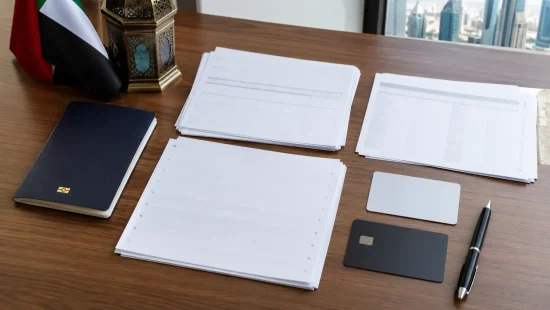
Document requirements vary by bank and card type, but salaried applicants are commonly asked for identity, residency, employment, and income documents.
For example, one UAE bank’s official card eligibility page lists AED 5,000 as the minimum salary and shows typical requirements such as Emirates ID, passport copy, salary certificate, and recent bank statements.
Common documents may include:
- Emirates ID
- Passport copy
- UAE residence visa copy
- Salary certificate
- Recent bank statements
- Completed application form
You should always check the latest requirements directly with the bank before applying because product rules, fees, and eligibility can change.
AED 3,000 Salary vs AED 5,000 Salary
| Factor | AED 3,000 Salary | AED 5,000 Salary |
| Standard credit card eligibility | Usually difficult | More realistic |
| Annual income | AED 36,000 | AED 60,000 |
| Meets common income benchmark | Usually no | Usually yes |
| Rejection risk | Higher | Lower, if other checks pass |
| Secured card option | May be possible | May be possible |
| Better next step | Ask about secured or prepaid options | Compare entry-level cards carefully |
Best Alternatives If You Earn AED 3,000
If your salary is AED 3,000, you do not have to rush into a credit card application. In many cases, alternatives may be safer and more practical.
Secured Credit Card
A secured credit card may be worth asking about if you have savings that can be placed as a fixed deposit. This option can help you access credit card features while reducing risk for the bank.
Before choosing this option, ask about the minimum deposit, annual fee, interest rate, credit limit, and deposit release process.
Debit Card
A debit card is useful for daily spending, ATM withdrawals, and many online payments. It does not help you borrow money, but it also reduces the risk of card debt.
For many people earning AED 3,000, a debit card is the safest everyday option.
Prepaid Card
A prepaid card lets you load money and spend only what you have added. It can be useful for budgeting, online subscriptions, travel, and controlled spending.
It is not the same as a credit card and usually does not build credit history, but it can be a practical alternative.
Common Misleading Claims to Avoid
Be careful with online claims that make approval sound easy. A credit card is a regulated financial product, and no website or agent can guarantee approval for every applicant.
Avoid these claims:
- “Guaranteed credit card approval on AED 3,000 salary”
- “No salary required for any UAE credit card”
- “Every bank accepts AED 3,000 salary”
- “Apply to many banks to increase your chance”
- “Credit card rejection does not matter”
These claims can lead to unnecessary applications, rejection, fees, or poor financial decisions.
What Should You Do Before Applying?

Before applying, check whether your profile matches the bank’s basic credit card requirements. If your salary is AED 3,000, ask the bank about eligibility first instead of submitting multiple applications.
You should review:
- Salary requirement: Confirm whether the card requires AED 5,000 or more.
- Salary transfer: Check if regular salary deposits appear clearly in your bank account.
- Existing debts: Reduce loans or unpaid dues before applying.
- Documents: Keep your Emirates ID, passport copy, visa details, salary certificate, and bank statements ready.
- Fees and charges: Compare annual fees, interest rates, late payment fees, and cash advance charges.
If you do not meet the requirement, consider a secured card, debit card, or prepaid card until your income improves.
How to Improve Your Chances Over Time?
You can improve your eligibility by building a stronger financial profile.
Keep your salary transfers regular. Avoid bounced payments. Pay bills and any existing obligations on time. Reduce unnecessary debt. Keep your bank statements clean and avoid frequent overdraft-style behavior.
If you use a secured card, keep spending low and repay the full balance every month. Do not treat the credit limit as extra income.
Also avoid applying repeatedly in a short period. A careful application after meeting the criteria is better than several rushed applications while you are still below the requirement.
Should You Apply for a Credit Card on AED 3,000 Salary?

You should usually avoid applying for a standard unsecured credit card if your salary is AED 3,000 and the bank clearly requires AED 5,000. The rejection risk is high, and repeated applications may not help.
A better path is to ask your bank about secured card options, use a debit or prepaid card for everyday needs, and build a stable banking record. Once your salary reaches the usual eligibility level, you can compare entry-level credit cards more confidently.
The goal is not just to get approved. The goal is to use credit safely without creating financial stress.
Conclusion
Getting a credit card in UAE on 3000 salary is usually difficult for a standard unsecured card because AED 3,000 is below the common UAE income benchmark.
That does not mean you have no options. You can ask about a secured credit card, use a debit or prepaid card, improve your banking history, and apply later when your salary meets the usual requirement.
The safest decision is to check official bank criteria, avoid guaranteed-approval claims, and choose a card only when repayment will be comfortable.
FAQs
Can I get a credit card in UAE with AED 3,000 salary?
Usually, no. A standard unsecured credit card is difficult to get with AED 3,000 salary because it is below the common UAE income benchmark. A secured credit card may be possible depending on the bank.
What is the minimum salary for a credit card in UAE?
The commonly used minimum salary benchmark is AED 5,000 per month. Banks may still apply additional checks before approving your application.
Which bank gives a credit card for AED 3,000 salary in UAE?
There is no safe way to say one bank will definitely approve a credit card on AED 3,000 salary. You should ask banks about secured card options instead of relying on guaranteed-approval claims.
Can salary transfer help me get a credit card?
Salary transfer can help the bank see your income pattern, but it does not automatically make you eligible if your salary is below the bank’s requirement.
Is a secured credit card better for AED 3,000 salary?
A secured credit card may be more realistic because it is usually backed by a fixed deposit or blocked amount. However, you still need to check fees, limits, and repayment rules.
Is a prepaid card the same as a credit card?
No. A prepaid card uses money you load onto it. A credit card gives you borrowed money from the bank, which must be repaid.
Will a rejected application affect future approval?
One rejection may not end your chances, but repeated applications can make your profile look risky. It is better to check eligibility before applying.
Should I wait until my salary becomes AED 5,000?
In many cases, yes. If you can wait until your salary reaches AED 5,000 or more, you may have more options and a better chance of approval.
Editorial Note
This article is for general informational purposes only and should not be treated as financial advice or a guarantee of approval. Credit card eligibility, fees, limits, and approval rules can change by bank, product, and applicant profile. Always confirm the latest terms directly with the bank before applying.
How We Checked
We checked official UAE and bank-level sources to verify the main income benchmark, example card eligibility requirements, and credit report information.
The article prioritises official regulatory and financial sources over comparison websites, forums, or unverified approval claims. The content was also reviewed to avoid guaranteed-approval language, misleading low-salary claims, and unsafe financial recommendations.